Victoria’s forests are the most carbon-dense on the planet—home to endangered wildlife found nowhere else on Earth, as well as the world’s tallest flowering tree, the mountain ash. It’s time they were protected for good.
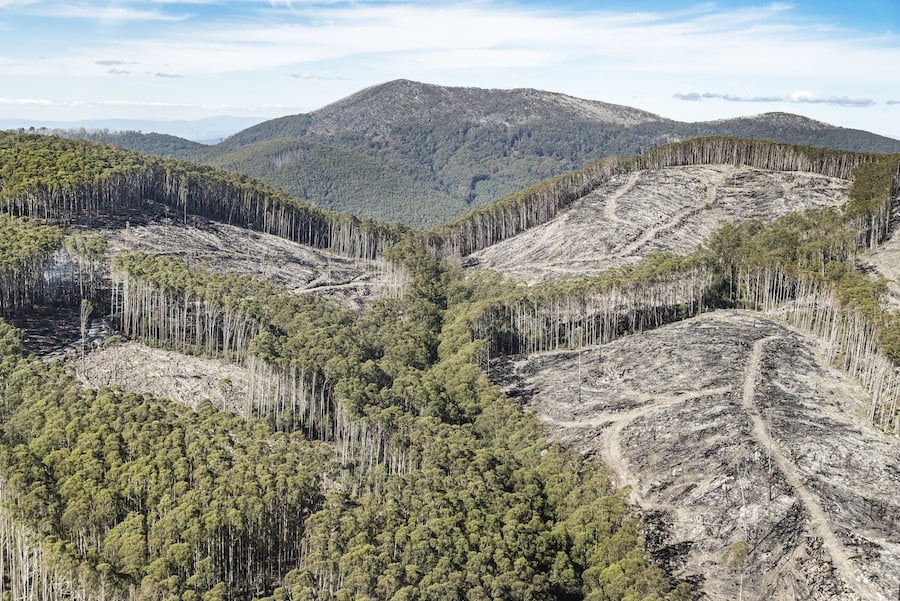
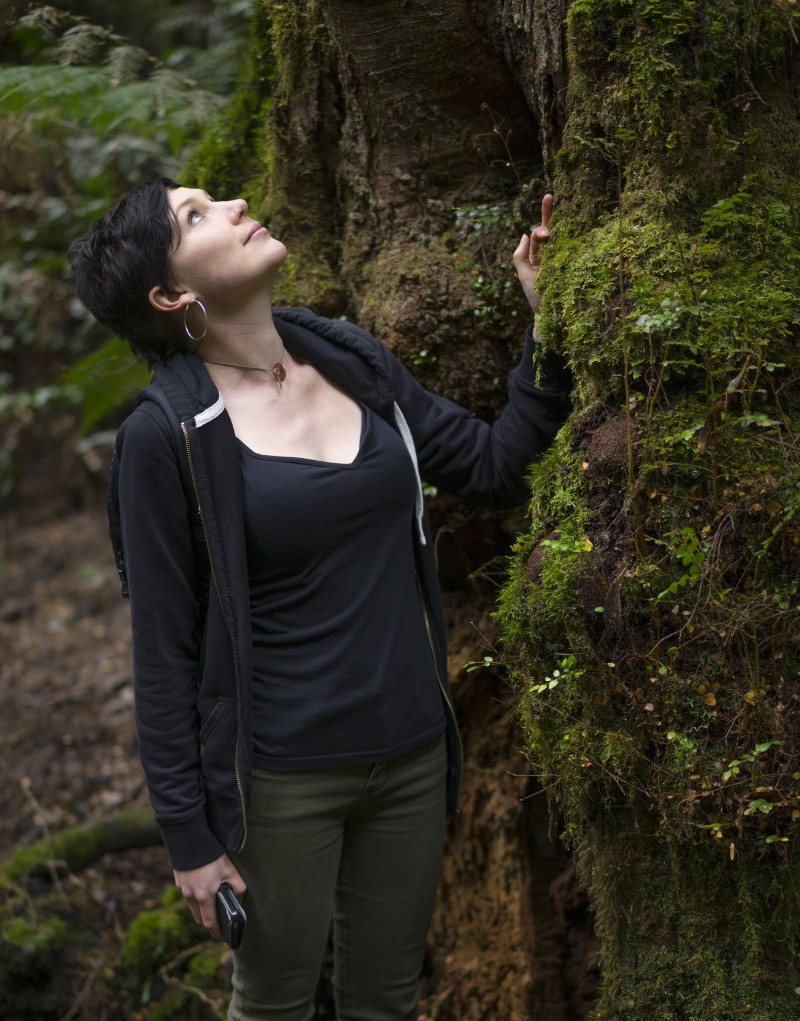
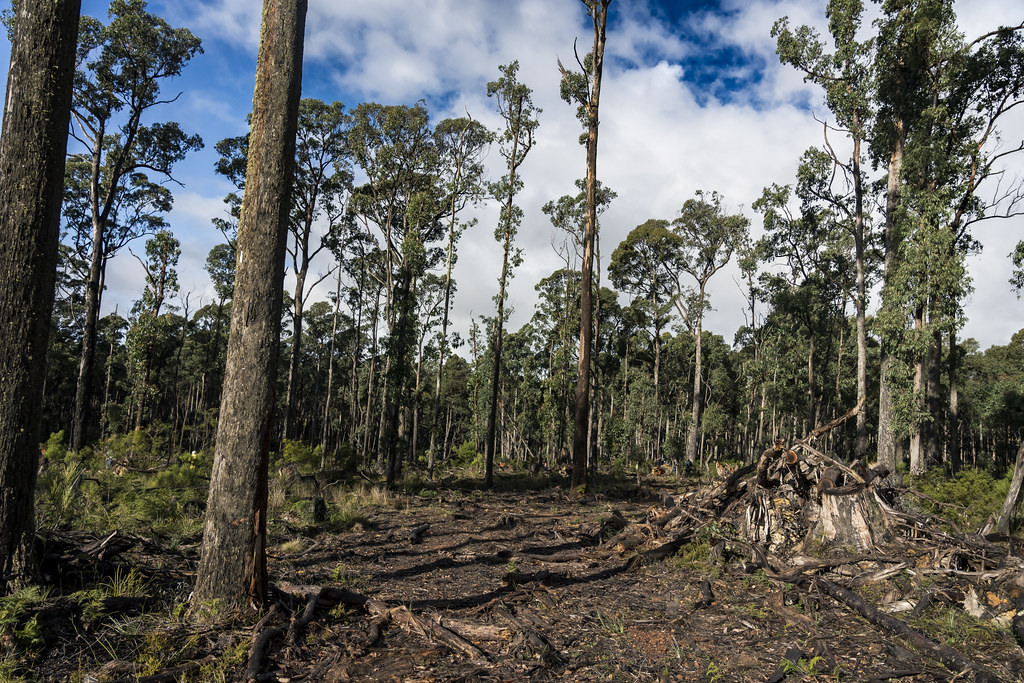
Image: Meg BauerFor decades, Victoria’s spectacular tall forests have been destroyed by chainsaws, bulldozers and post-logging burns. Through political advocacy and community engagement, Wilderness Society has protected hundreds of thousands of hectares of Victoria’s forests in national parks and reserves, and convinced big businesses like Bunnings, Officeworks and NAB to move away from using paper and wood sourced from them. And thanks to the persistence and belief of our supporters and other environmental groups, Victorians will soon see an end to clearfell logging across the state.
Looking ahead, we now need to ensure these unique and remarkable forests get long-lasting protection through projects like Great Forest National Park and Emerald Link. These conservation proposals won’t just benefit forests and wildlife—they’ll provide secure jobs, safeguard carbon stocks and clean drinking water supplies, and add millions of dollars to regional economies.
Image: Rob Blakers
Have your say!
The Victorian government is inviting Victorians like you to answer an important survey about the future of state forest areas now that native timber harvesting has finally ended. This is your chance to tell the government why you care that these precious ecosystems are protected for good.
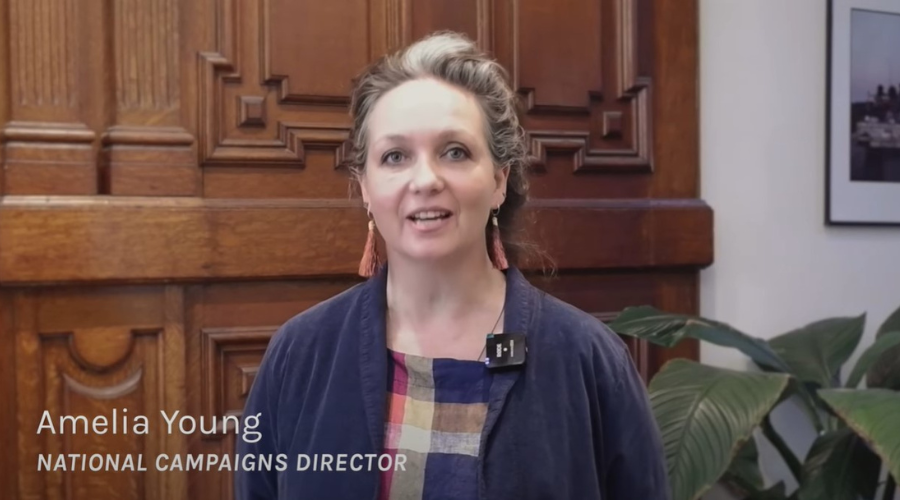
“We have an opportunity to secure a sanctuary for these special forests and all the wildlife that call them home. In some ways, the campaign is just beginning.”
—Amelia Young, National Campaigns Director
What sets these forests apart?
status
Unique ecosystems
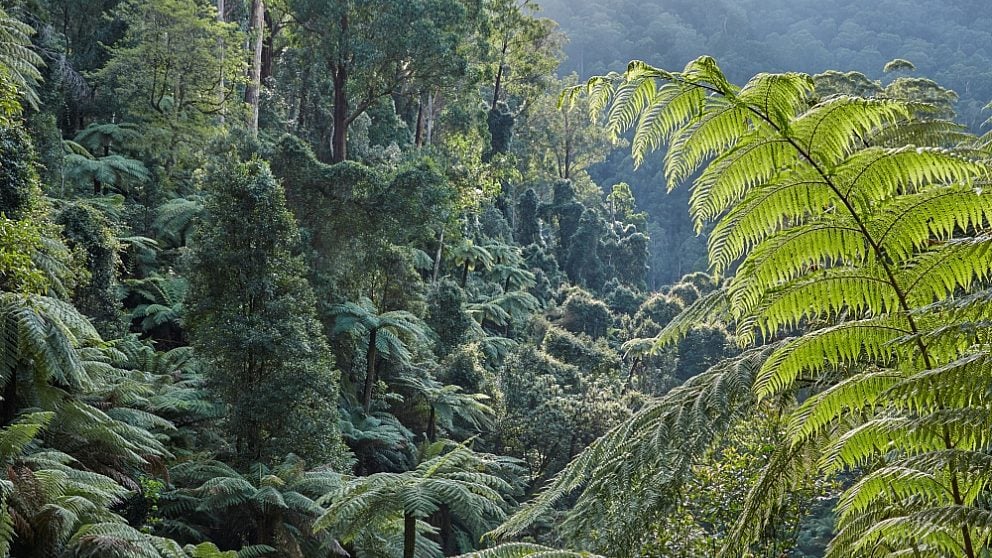
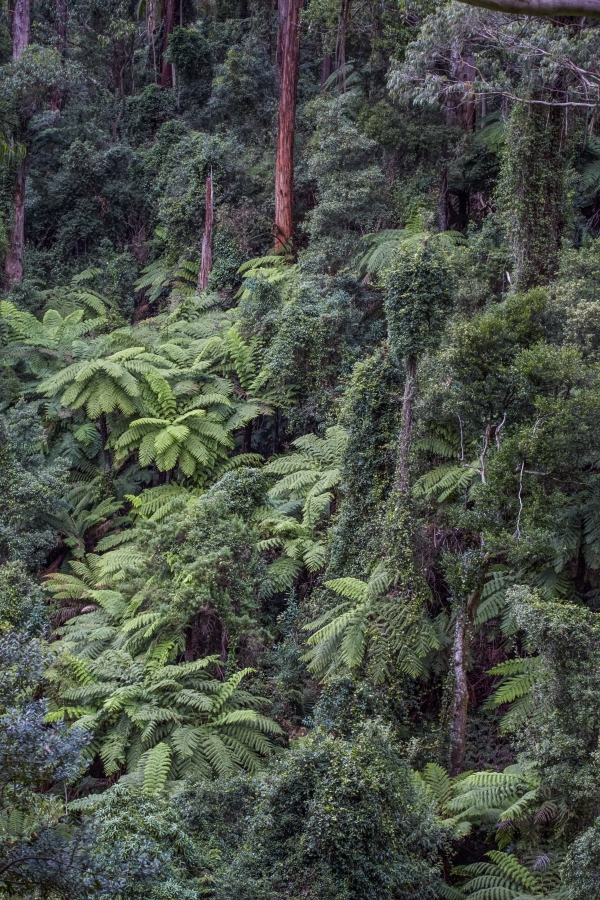
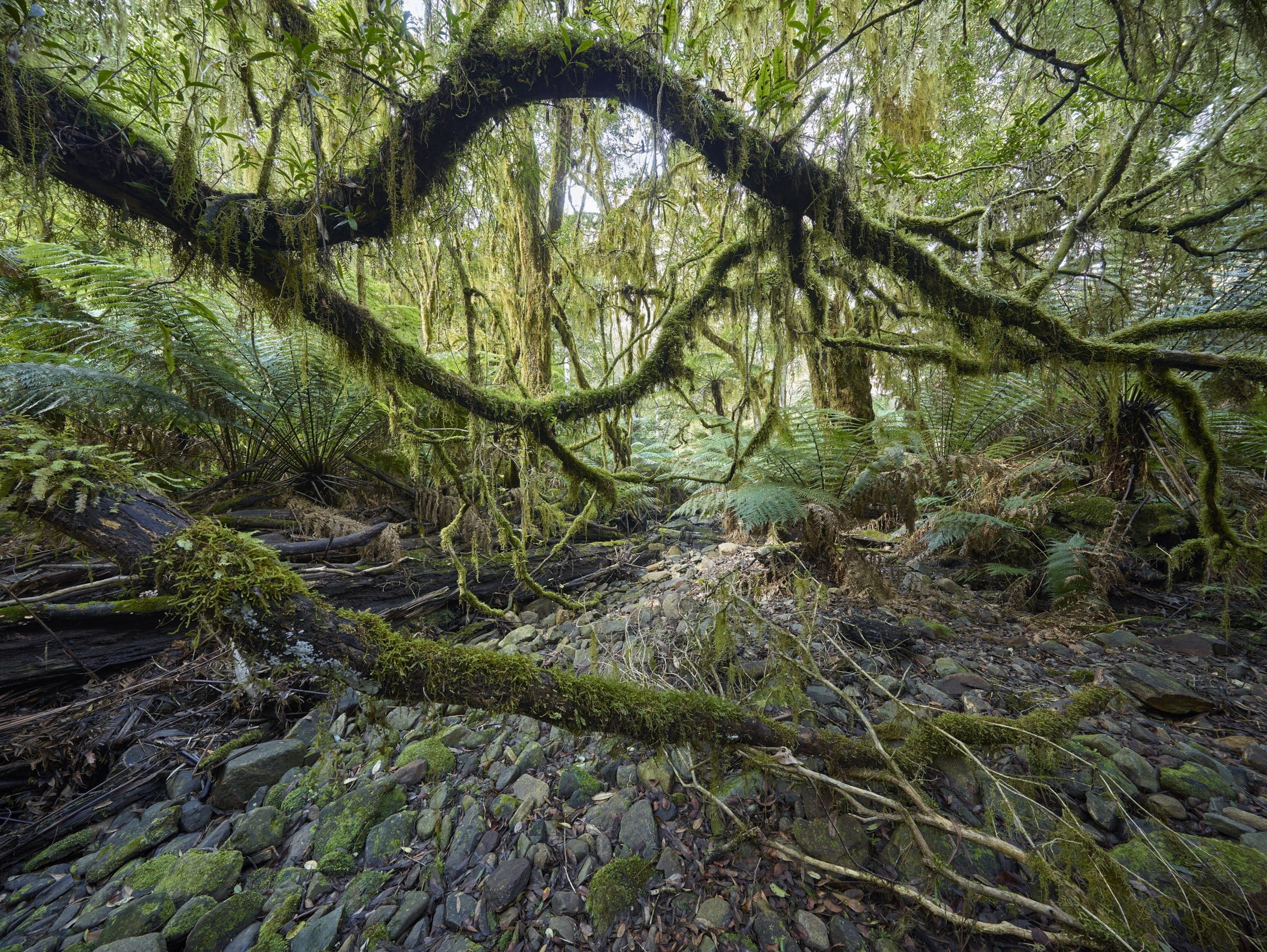
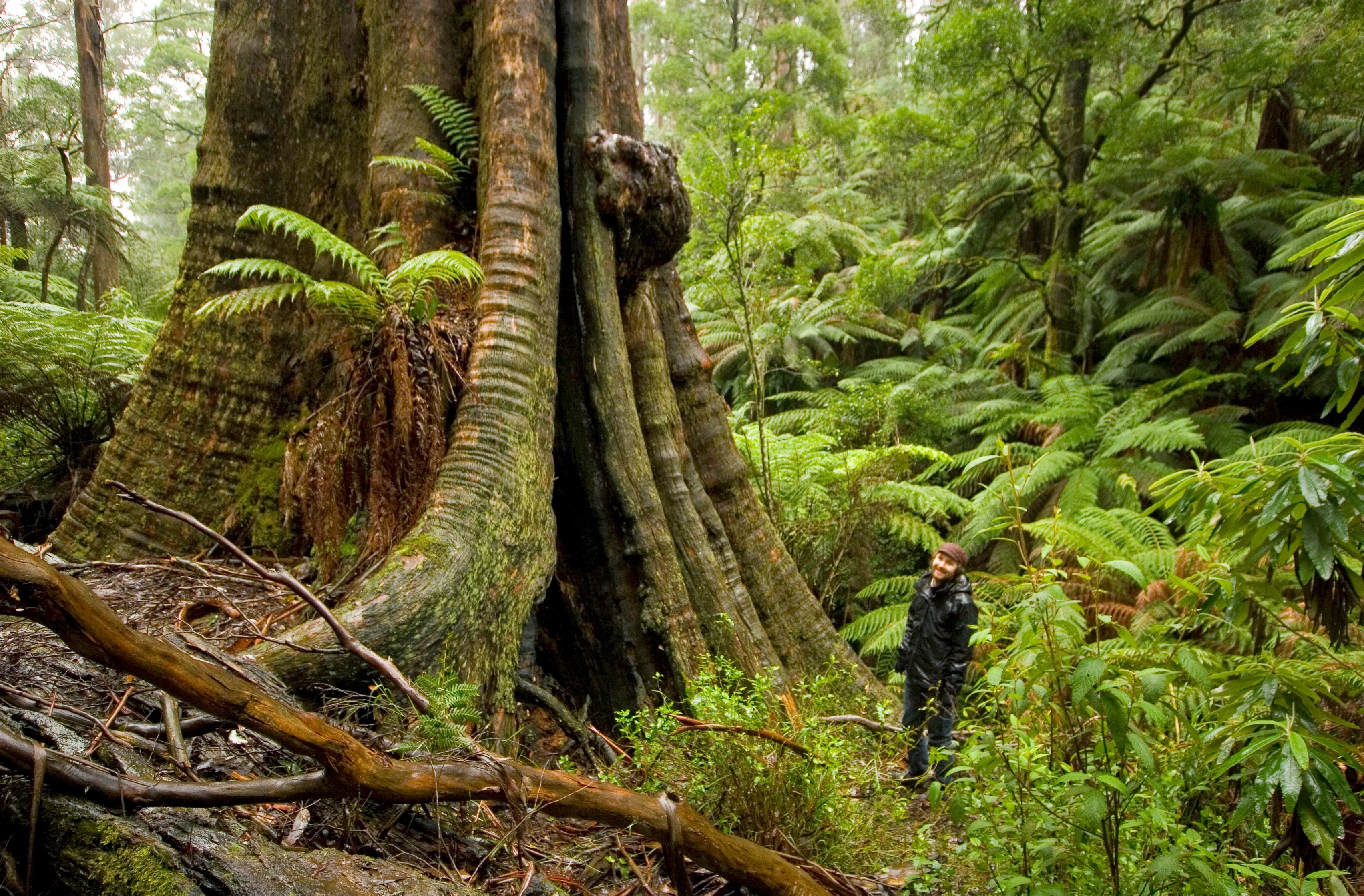
Warm temperate rainforests thrive in the wet gullies of East Gippsland’s lowlands, fed by moisture coming in off the Southern Ocean. The variety of forest types makes the region a window into Australia’s evolutionary past, with plants evolved from ancient species that were growing on the supercontinent of Gondwana hundreds of millions of years ago. Image: Rob Blakers
Unique ecosystems
At 1230m above sea level, Mt Ellery is the highest peak in far East Gippsland. Forests are continuous from its summit to the coast of Croajingalong. Image: Judith Deland
Unique ecosystems
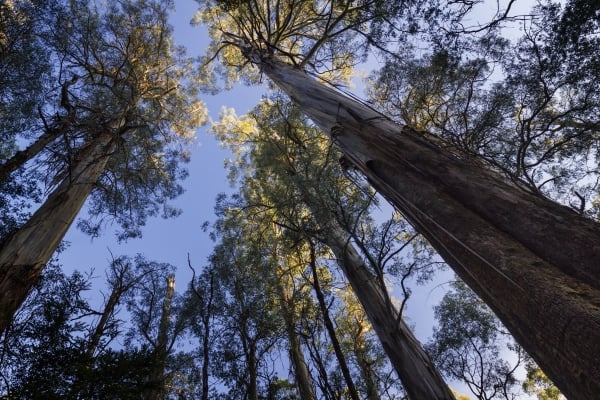
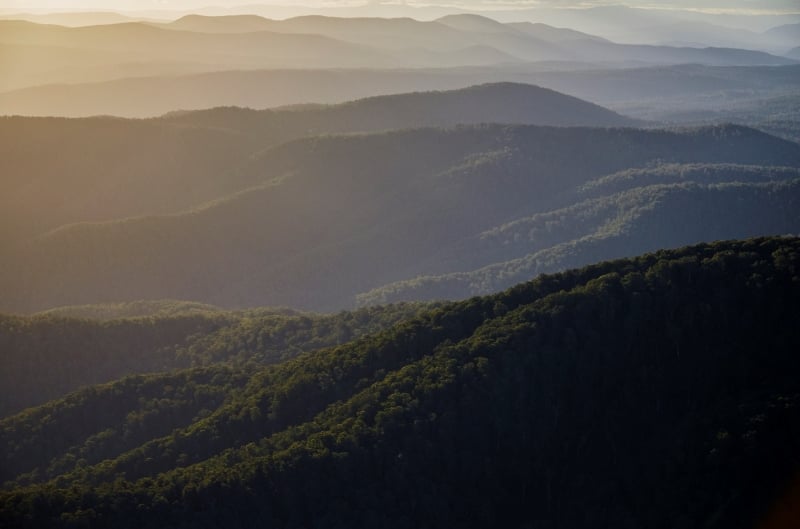
In the Central Highlands, magnificent stands of mountain ash (Eucalyptus regnans) blanket the mountains. They are the tallest flowering—and the tallest hardwood—trees on Earth. Image: Louise Chen
Unique ecosystems
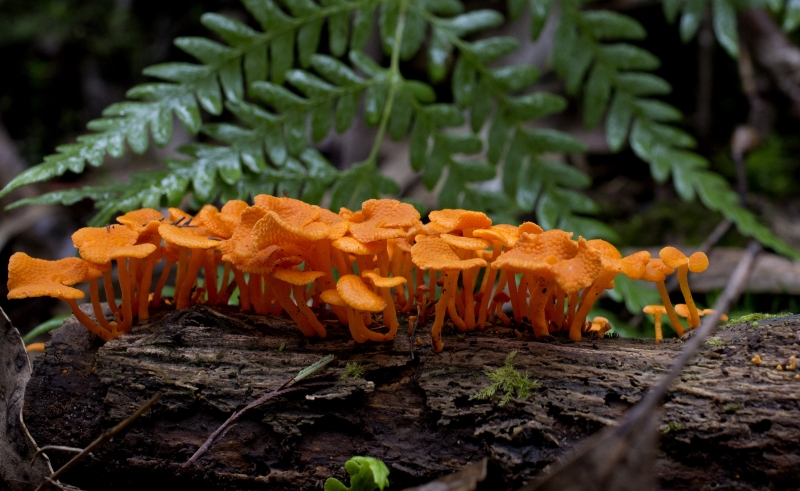
In East Gippsland, sassafras and black olive berry trees form cool temperate rainforest canopies over small streams fringed with elegant ferns and colourful fungi. Image: Judith Deland
Unique ecosystems
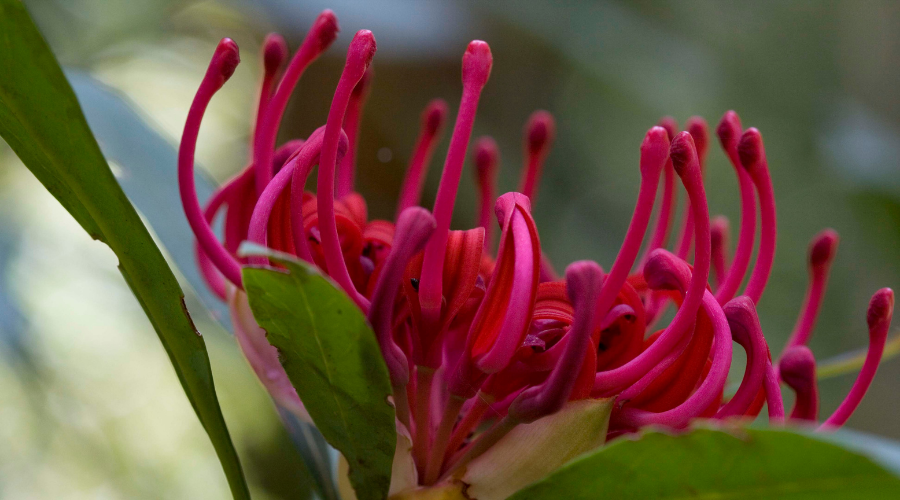
The Gippsland waratah (Telopea oreades) grows in tall wet forests and rainforests like Kuark. It produces large red flowers each spring. Image: GECO.
Unique ecosystems
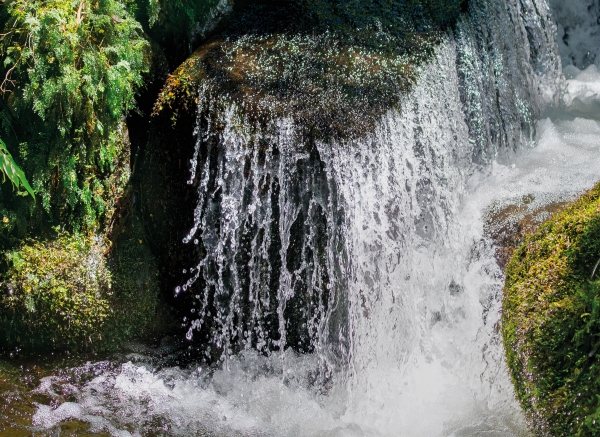
The majority of Melbourne's clean drinking water comes from the spectacular Central Highlands. Image: Louise Chen
Unique ecosystems
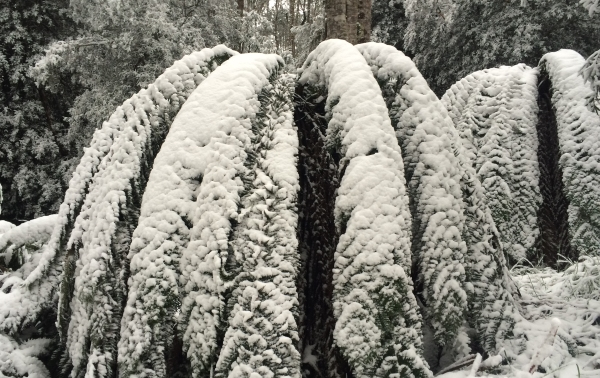
Winter snowfalls are common in the montane wet forests and rainforests of the Errinundra plateau. Image: Ed Hill
There are some parts of Australia that are largely intact, escaping much of the dramatic change wrought by European colonisation. One of these precious places is the tall old forests of Victoria’s east, where Traditional Owners have long and continuing custodianship of the land and waters.
It’s the east of Victoria’s unique position, jutting out between two oceans, that has graced it with such diverse and spectacular forests. The sheer variety of forest types and their grand old age—descended from the forests of the Gondwanan supercontinent—have given rise to an extraordinary biodiversity of plants and animals.
Here, an unbroken corridor of thriving vegetation stretches from the coast to the alps, unlike anywhere else on the Australian mainland. Even after decades of clearfell-logging and successive bushfires, you can walk from the coast up through the temperate rainforests of East Gippsland and be met by towering trees in the Central Highlands, where magnificent stands of mountain ash (Eucalyptus regnans) blanket the mountains.
status
Wondrous wildlife
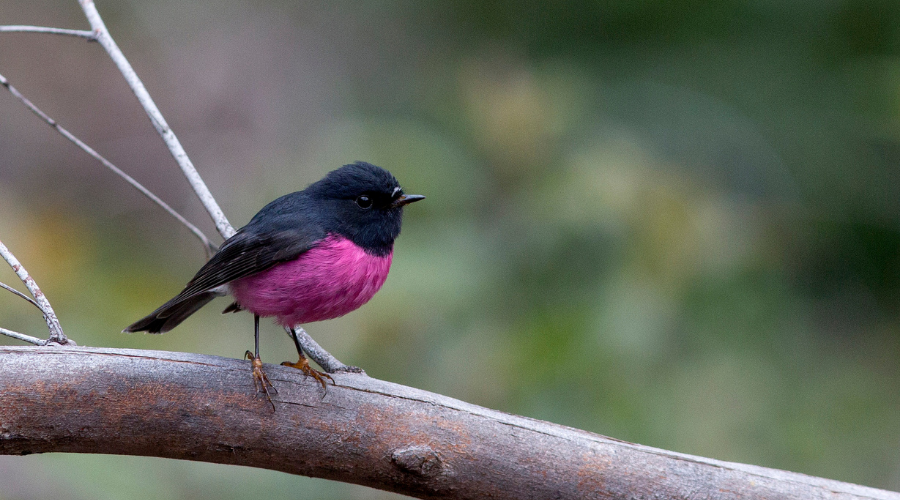
Dazzling rose robins stand out amongst the lush greenery of eastern Victoria's rainforests. Image: Judith Deland
Wondrous wildlife
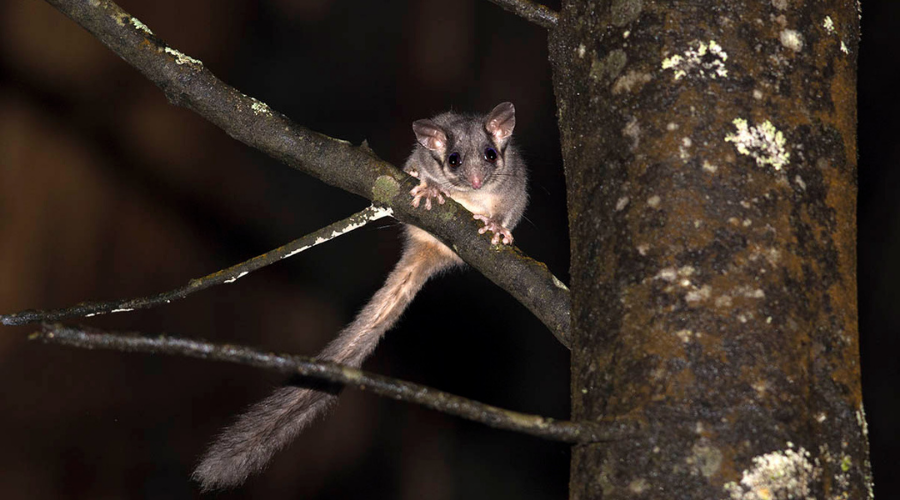
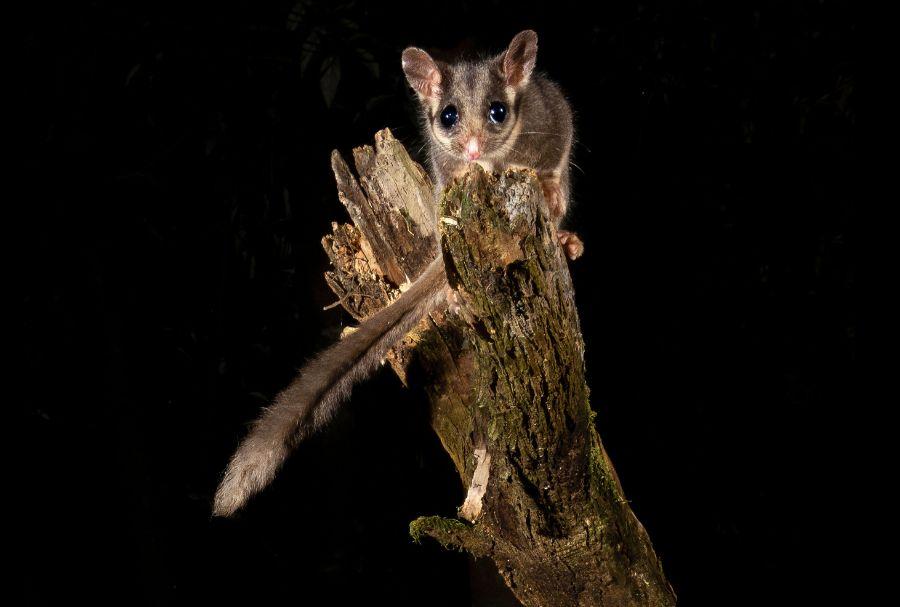
Critically endangered Leadbeater's possums shelter and breed in hollows formed in old trees in Victoria's tall forests. Image: Tim Bawden
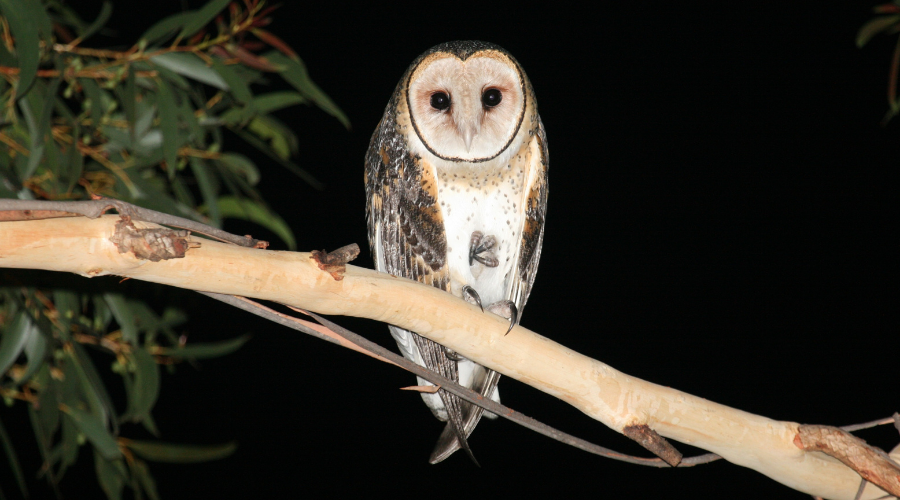
Endangered masked owls roosts in large old trees and hunt for possums, rodents and other small mammals in the forest at night. Image: Rohan Bilney
Wondrous wildlife
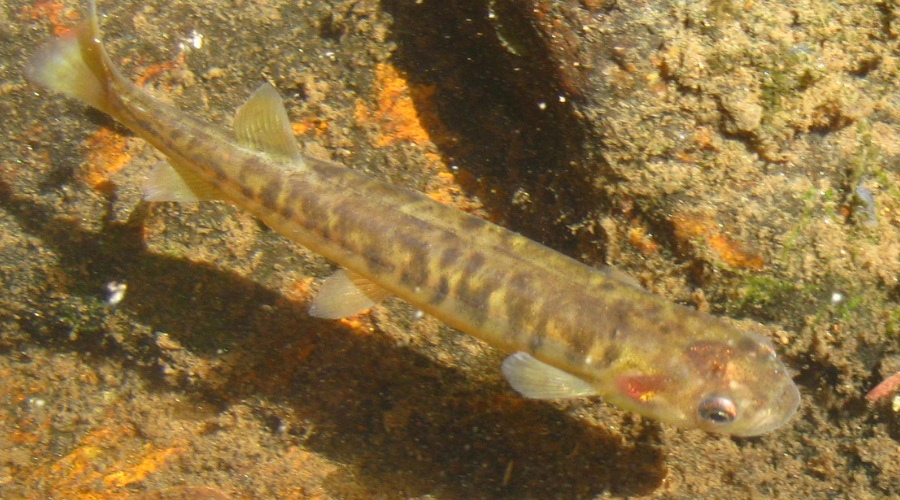
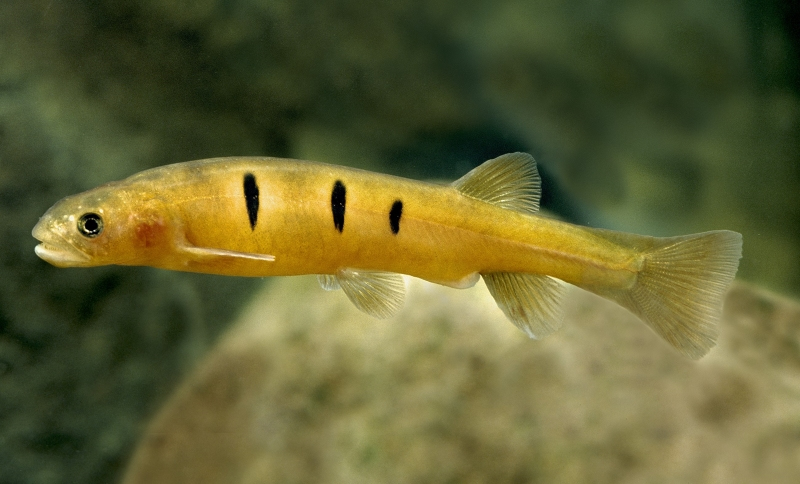
The East Gippsland Galaxias fish (Galaxias aequipinnis) is found nowhere else on Earth other than the Arte River catchment in Kuark Forest. Image: Andrew Lincoln
Wondrous wildlife
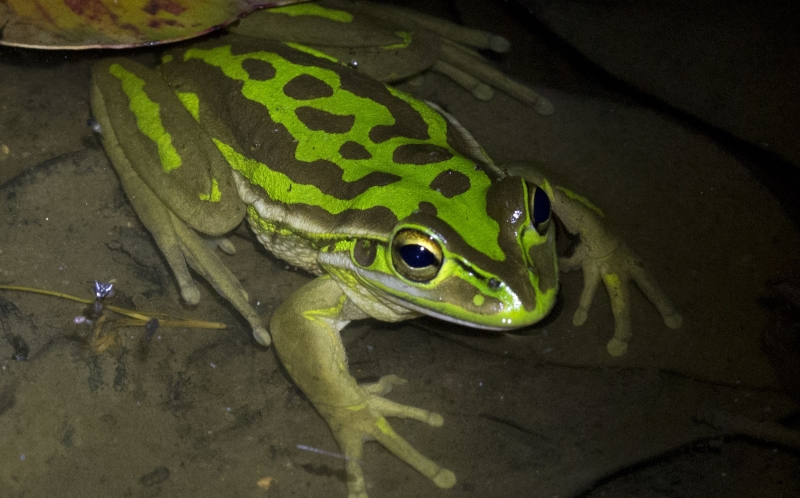
Green and golden bell frogs are listed as endangered in NSW. East Gippsland's pristine coastal areas form an important stronghold for this species. Image: Judith Deland
Wondrous wildlife
Barred galaxias is an endangered Victorian freshwater fish, only found at elevations greater than 400 metres. Image: Gunther Schmida
Wondrous wildlife
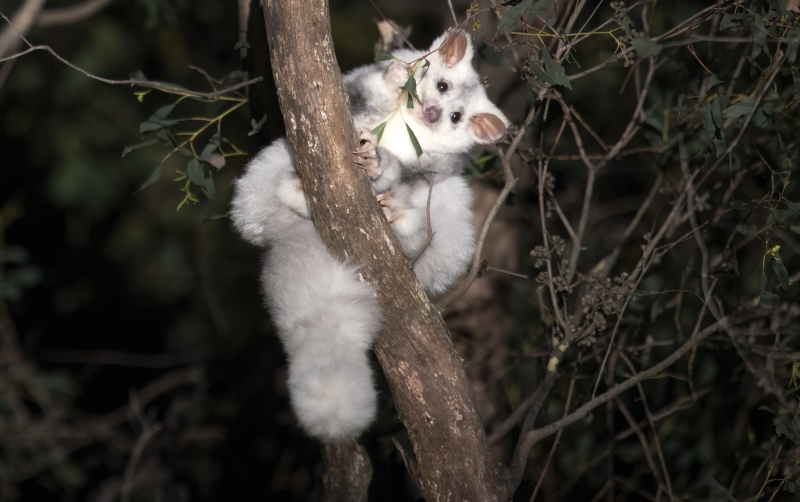
Western science is still unravelling the region’s biodiversity secrets. In 2020, the greater glider (Petauroides volans)—a large, nocturnal marsupial that glides through the forest from tree to tree—was found to be not one but three unique species. Image: Justin Cally
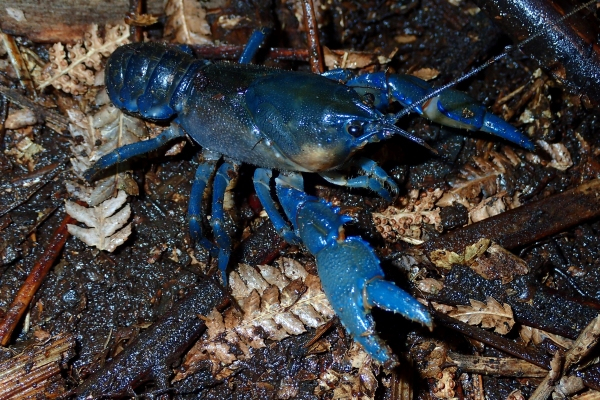
East Gippsland is the only place on Earth you'll find the Orbost spiny crayfish. Image: Andrew Lincoln
Eastern Victoria is the only place on Earth you'll find unique animals like the critically endangered Leadbeater’s possum—which first emerged as a species in these forests some 20 million years ago—and the East Gippsland galaxias fish, which is only found in streams in the Kuark forest. These areas provide critical habitat for many Australian species like the endangered long-footed potoroo, greater and yellow-bellied gliders, and spotted quolls. Rare birds like boobooks and powerful owls call from the trees, while striking yellow-tufted honeyeaters and pink robins dart about the understorey.
Industrial native forest logging to end in Victoria!
Caption: National Campaigns Director Amelia Young on the news that Victorian native forest logging is set to end by 2024.
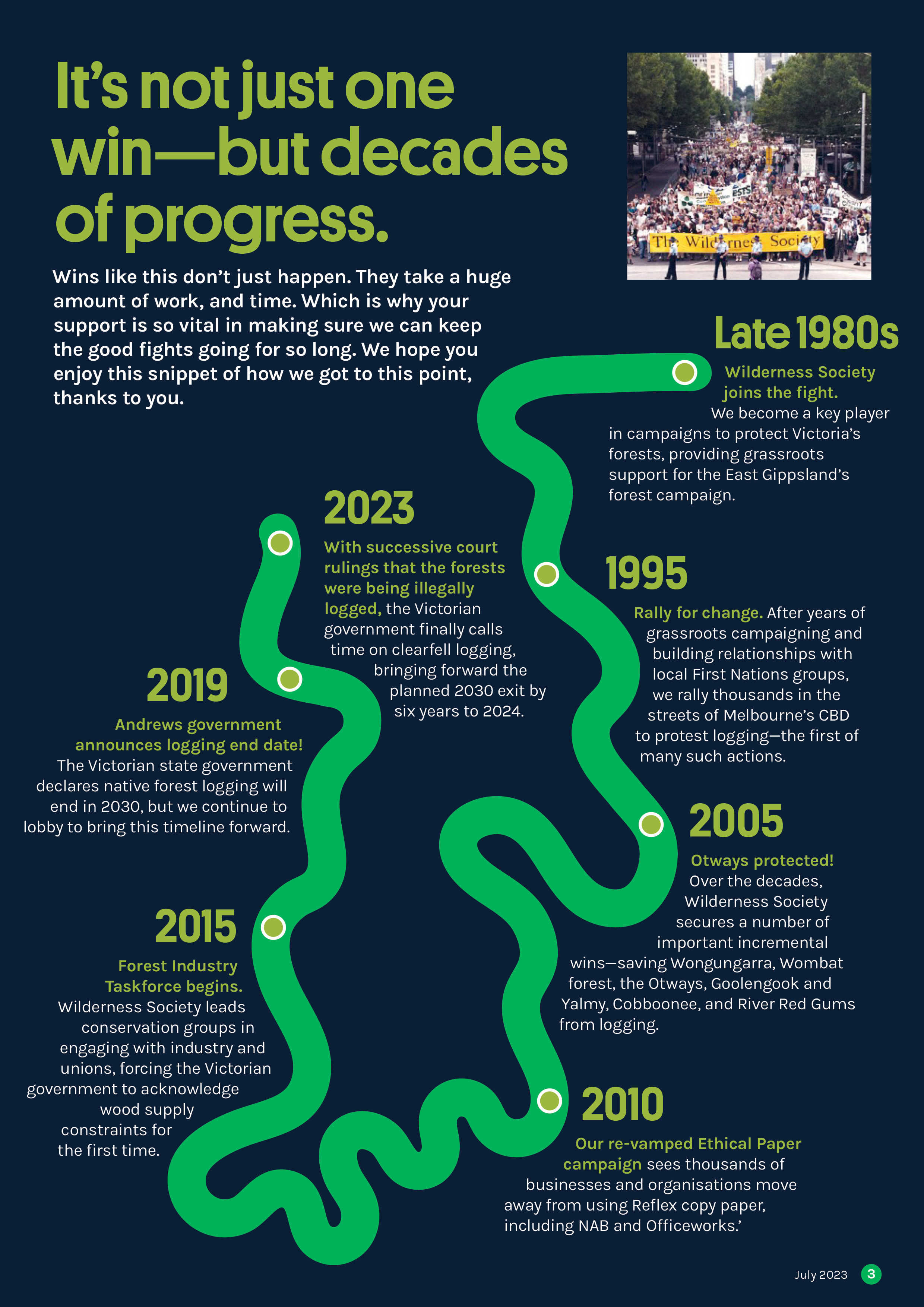
The Victorian government announced in May that it will end native forest logging years earlier than originally planned—bringing the end date forward from 2030 to 1 January 2024!
This is a momentous result not just for the forests and animals, but for the
Melburnians who depend on the clean drinking water these critical ecosystems
provide, First Nations groups with deep spiritual ties to the land, regional
communities looking for decent and secure jobs, and every Australian who wants a
safe and livable climate.
Creating the Great Forest National Park
Image: Louise Chen
The Great Forest National Park is a proposal for a new, multi-use park, which would connect existing national parks and conservation areas and add 355,000 hectares of new protected forest.
Only 60km north-east of Melbourne, the magnificent forests of the Central Highlands have been described as a ‘keeping place’ by Traditional Owners, which include the Wurundjeri, Taungurung and Gunai Kurnai people, and are home to one of Australia’s most endangered mammals: the Leadbeater’s possum.
This region already draws 3 million tourists per year—the Great Forest National Park would bring nearly 400,000 more, boosting the state economy by $71 million.
Creating the Emerald Link
Image: Judith Deland
The Emerald Link is a community-led initiative based on nature-tourism opportunities and a positive vision for the forest and communities of East Gippsland.
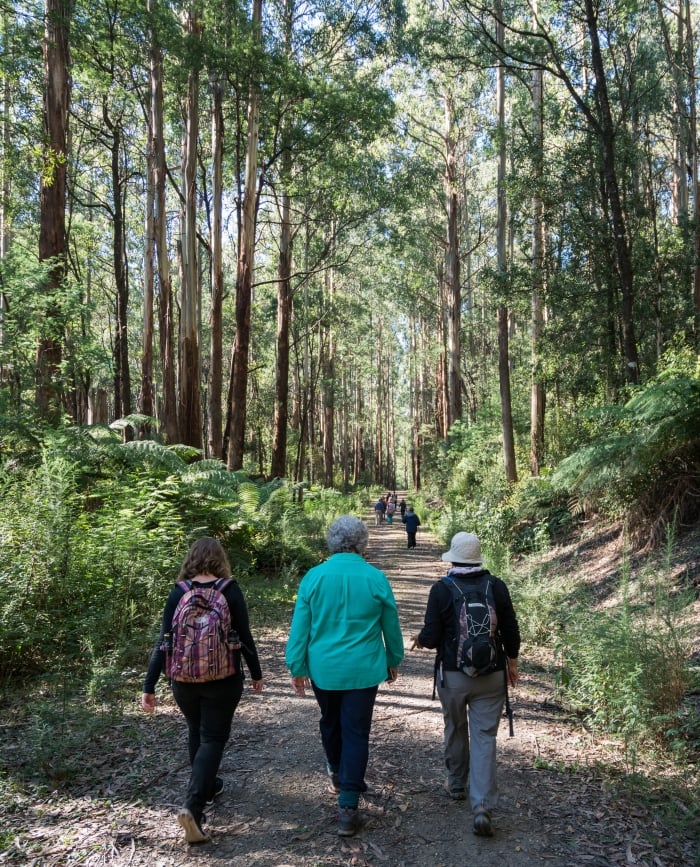
These far-east forests of Victoria form the only continuous tract of vegetation that remains on mainland Australia—from snowy alpine peaks to the shores of rugged coastlines. East Gippsland’s Emerald Link could become a world-class conservation tourism destination, with exciting nature recreation trails like the Sea to Summit.
With your help, we’re pushing to make these promising proposals a reality for the future of Victoria’s forests—and for us all.
Forests for the future
Image: Rob Blakers
With your support, we’re working towards permanent protection of Victoria's tall forests and all the precious species that live there. We’re establishing the Emerald Link, a community-led initiative based on nature-tourism opportunities and a positive vision for the forest and communities of East Gippsland; championing the formation of theGreat Forest National Park; and helping people and businesses make an informed and ethical choice about the paper and packaging products they purchase.