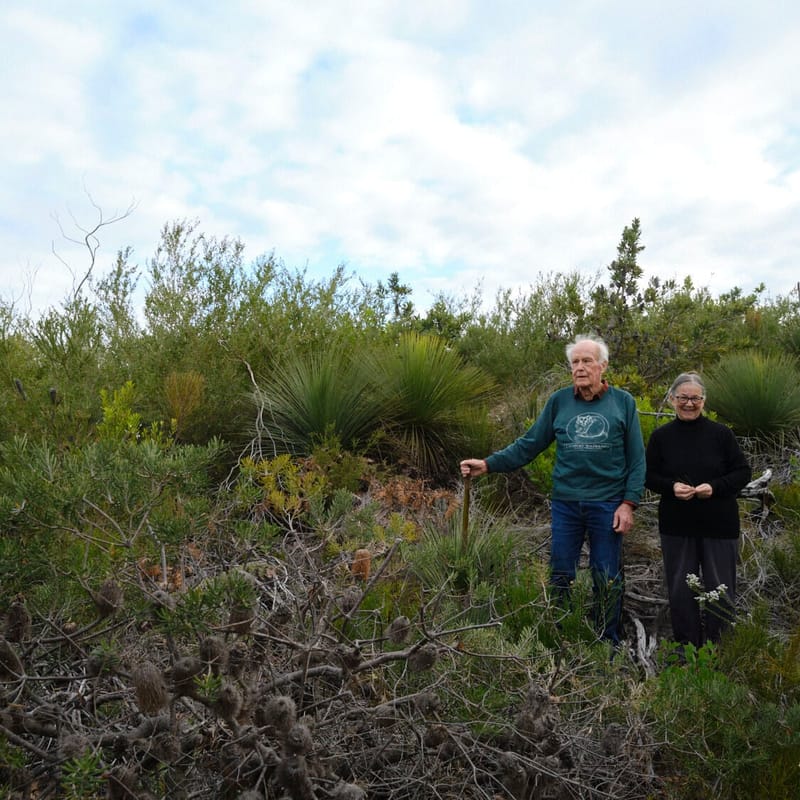
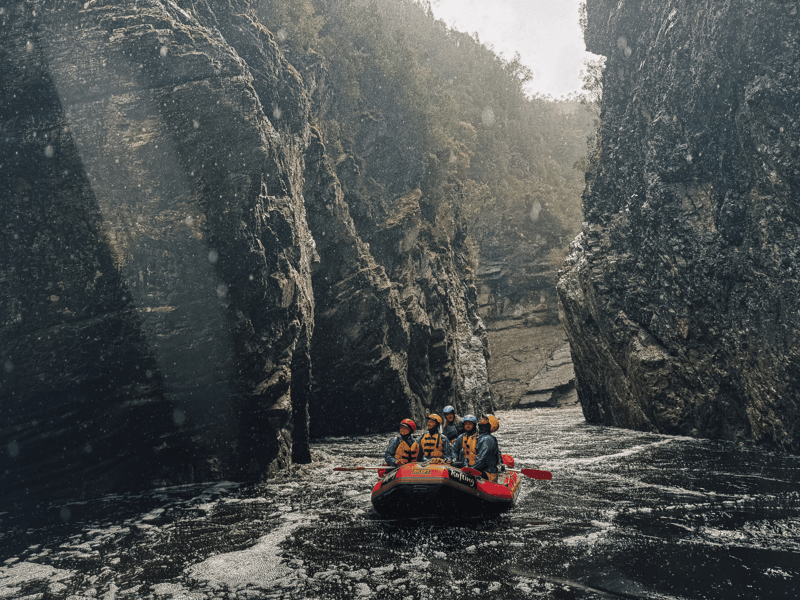
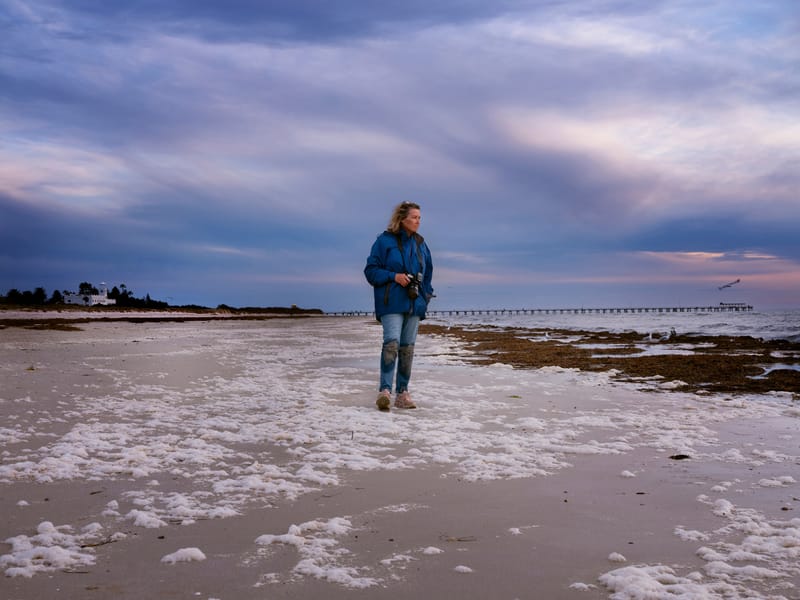
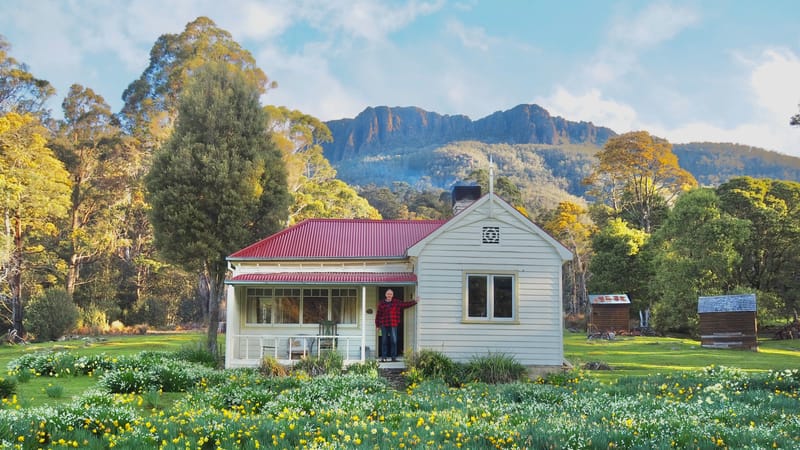
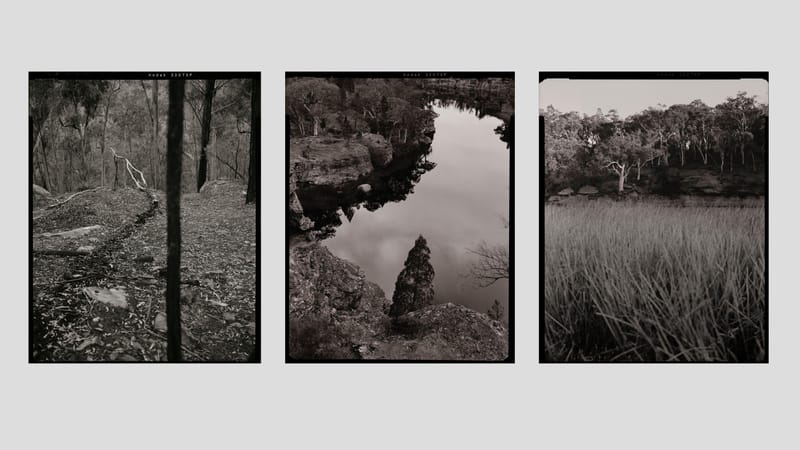
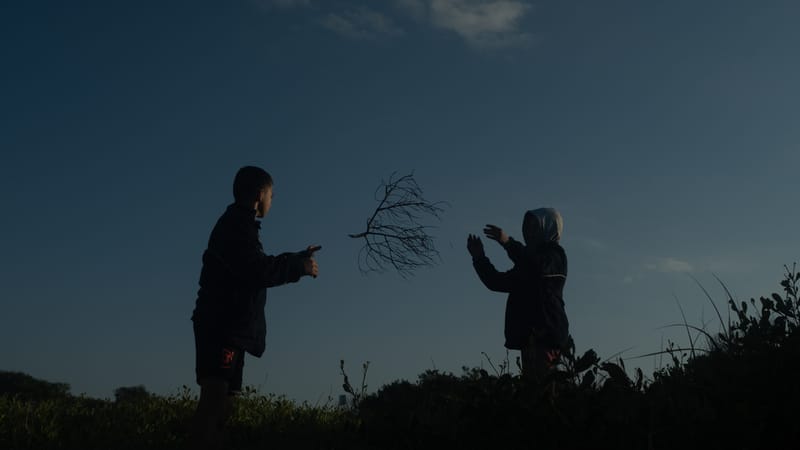
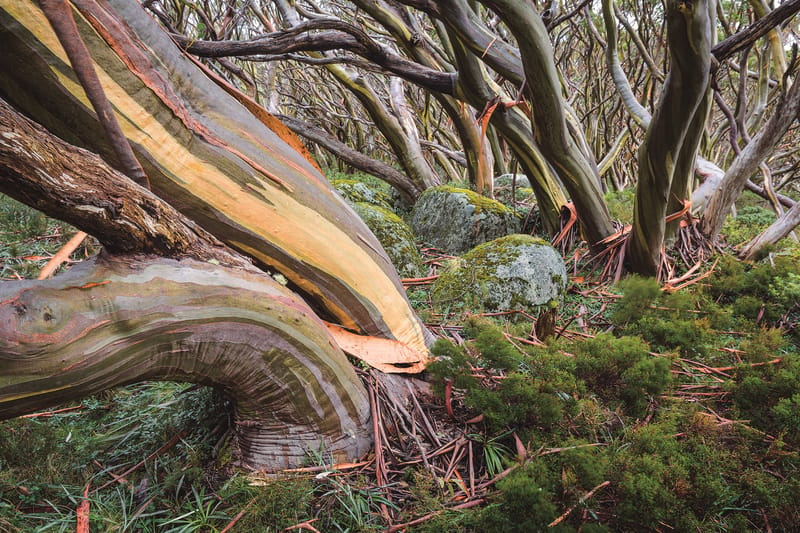
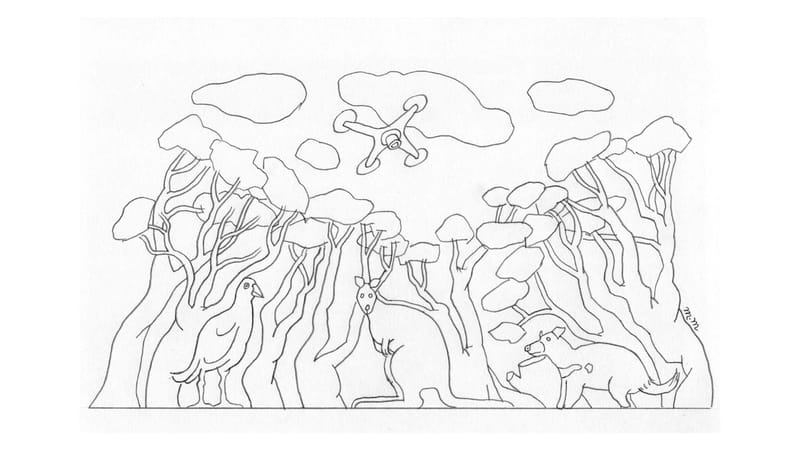
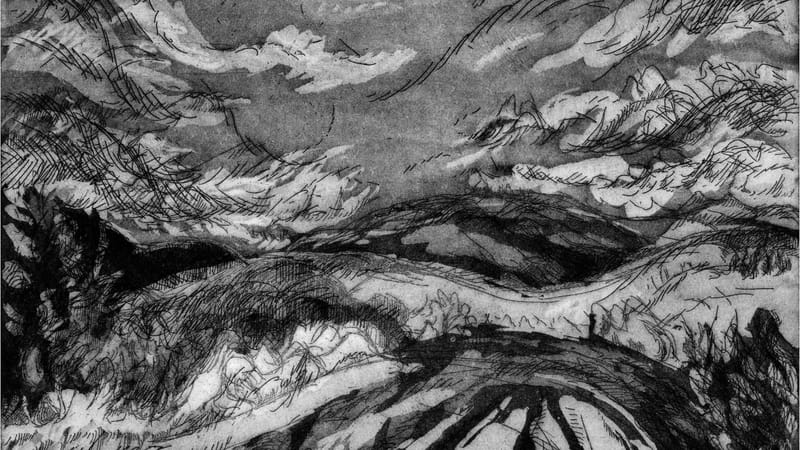
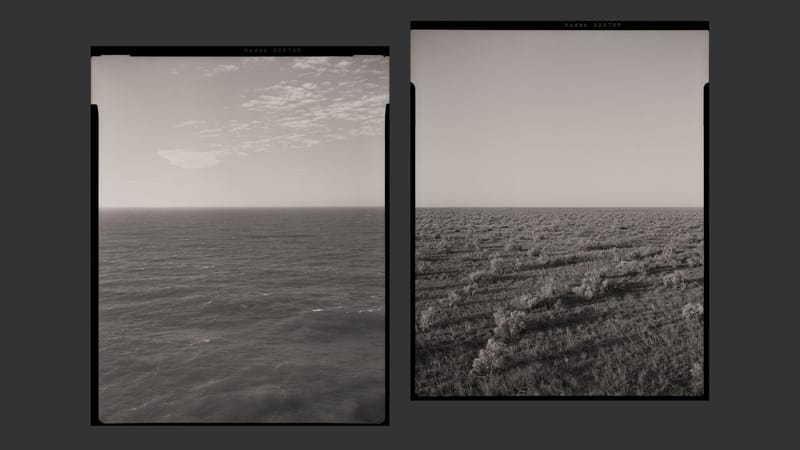
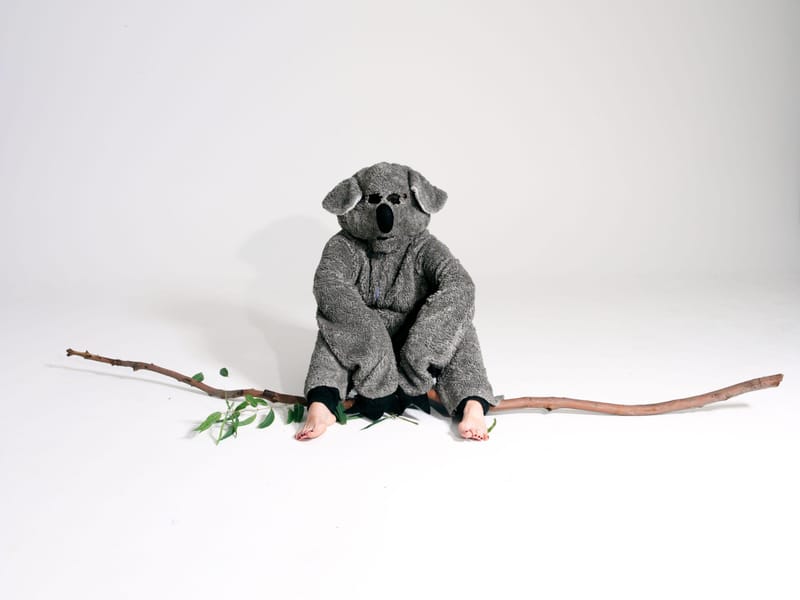
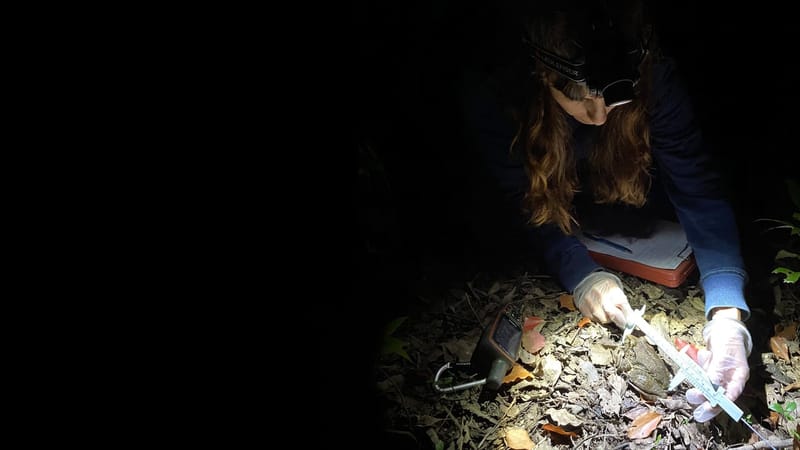
The stories in this Journal are about books, and the people who make them to help us love and protect the natural world, in celebration of Nature Book Week and our Karajia and Environment Awards for Children's Literature.
Author Charlotte McConaghy tells us how birds, poetry and a life-changing article on climate change led her to write about the wild within us all, and takes us to Macquarie Island.
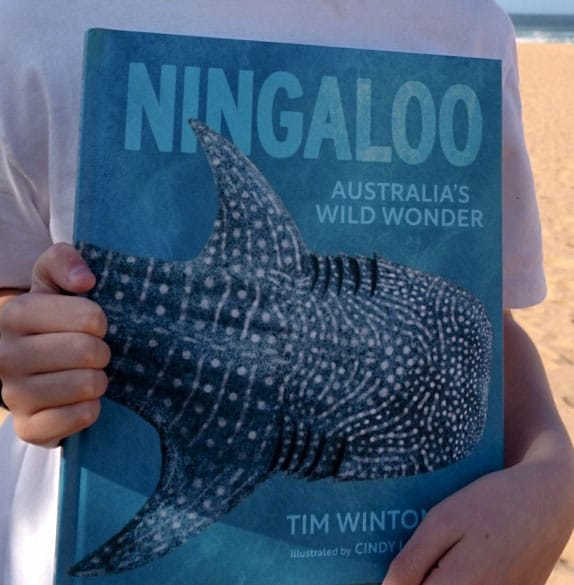
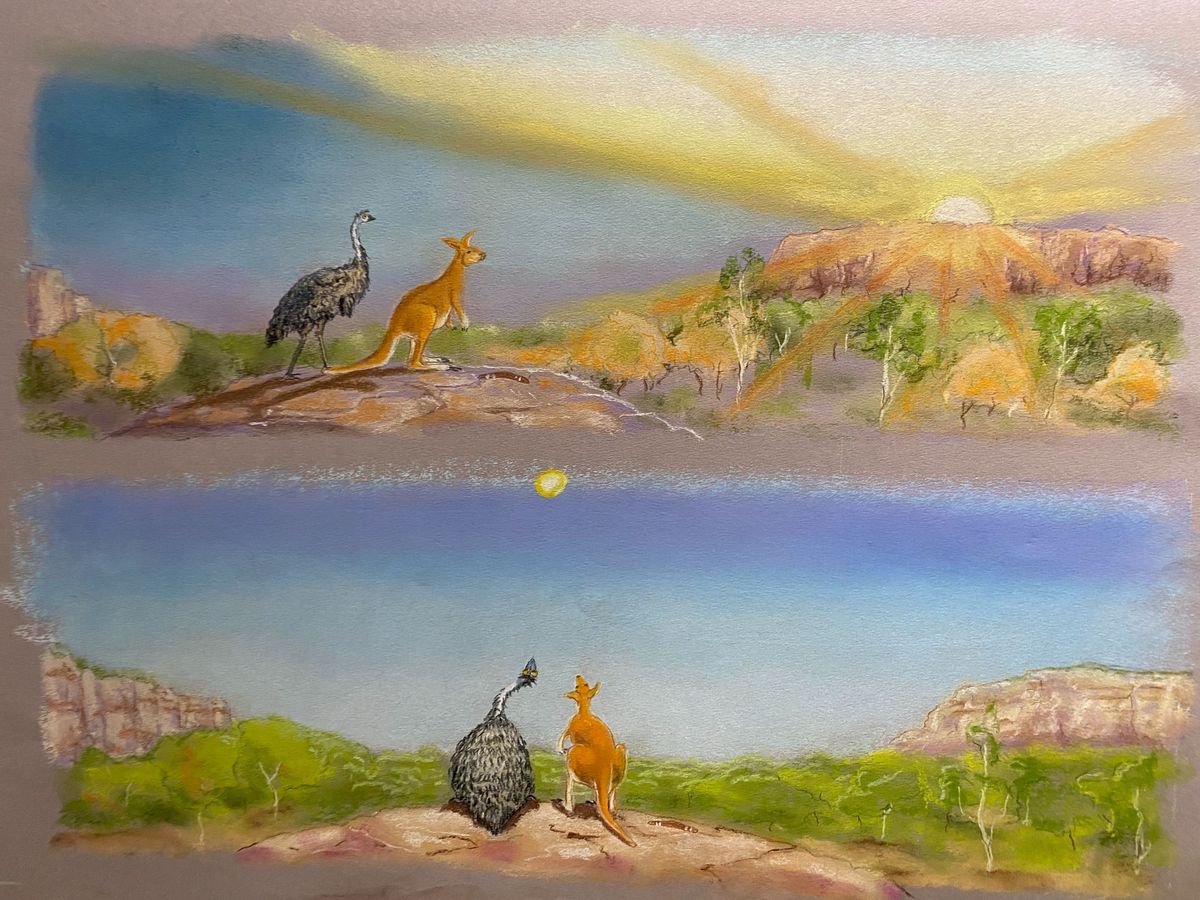
Tim Winton (winner of this year's Non-Fiction Environment Award) talks orcas and Ningaloo with our youngest contributor yet: an 11-year-old with plenty of questions, and illustrator Paul Seden explains why chalk pastels were the right choice for The First Sunrise.
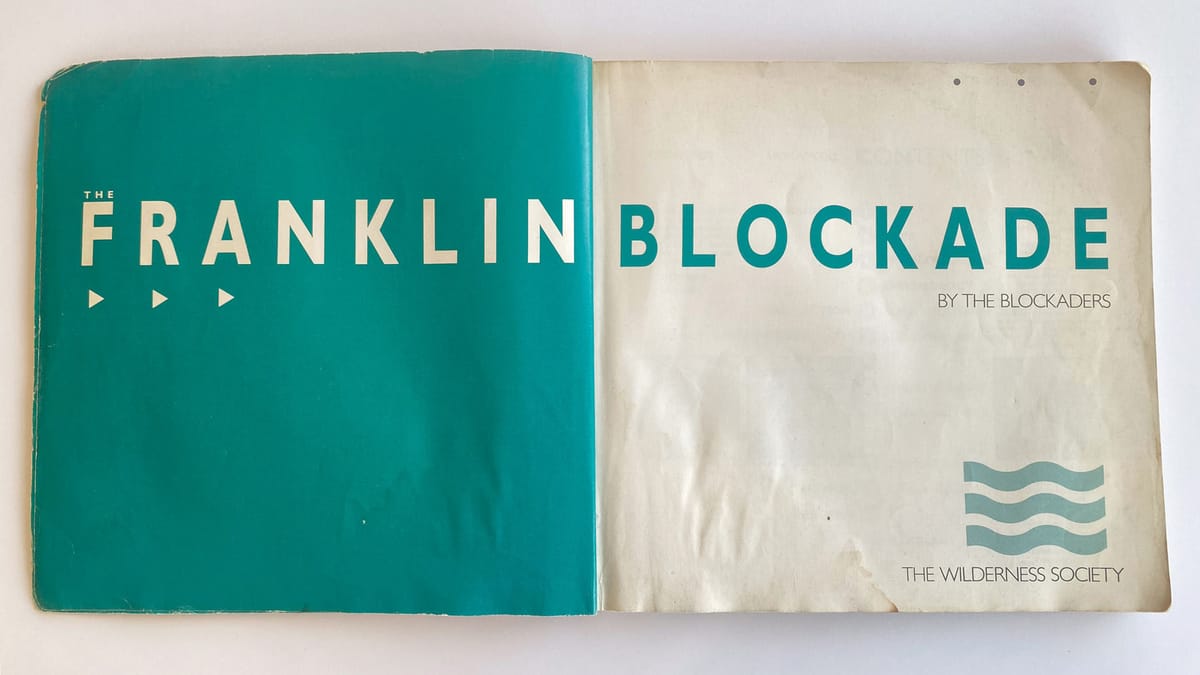
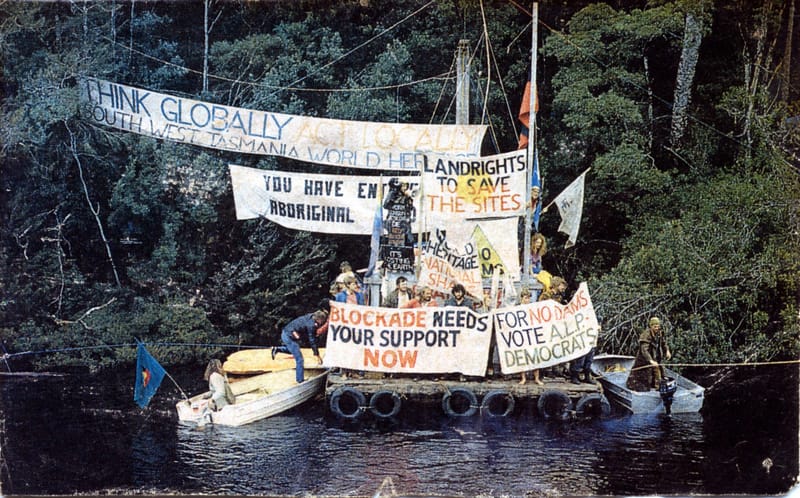
In our 50th year we also revisit The Wilderness Society Franklin Blockade by the Blockaders, published just after the Franklin River was saved and long out of print. Robin Tindale, Ian Skinner and Lilith Waud, who made the book, share how it came together and what it was like inside the largest peaceful direct action Australia has ever seen.
Finally, we've unearthed a handwritten letter of encouragement from Sir David Attenborough—a conservation giant who needs no introduction.
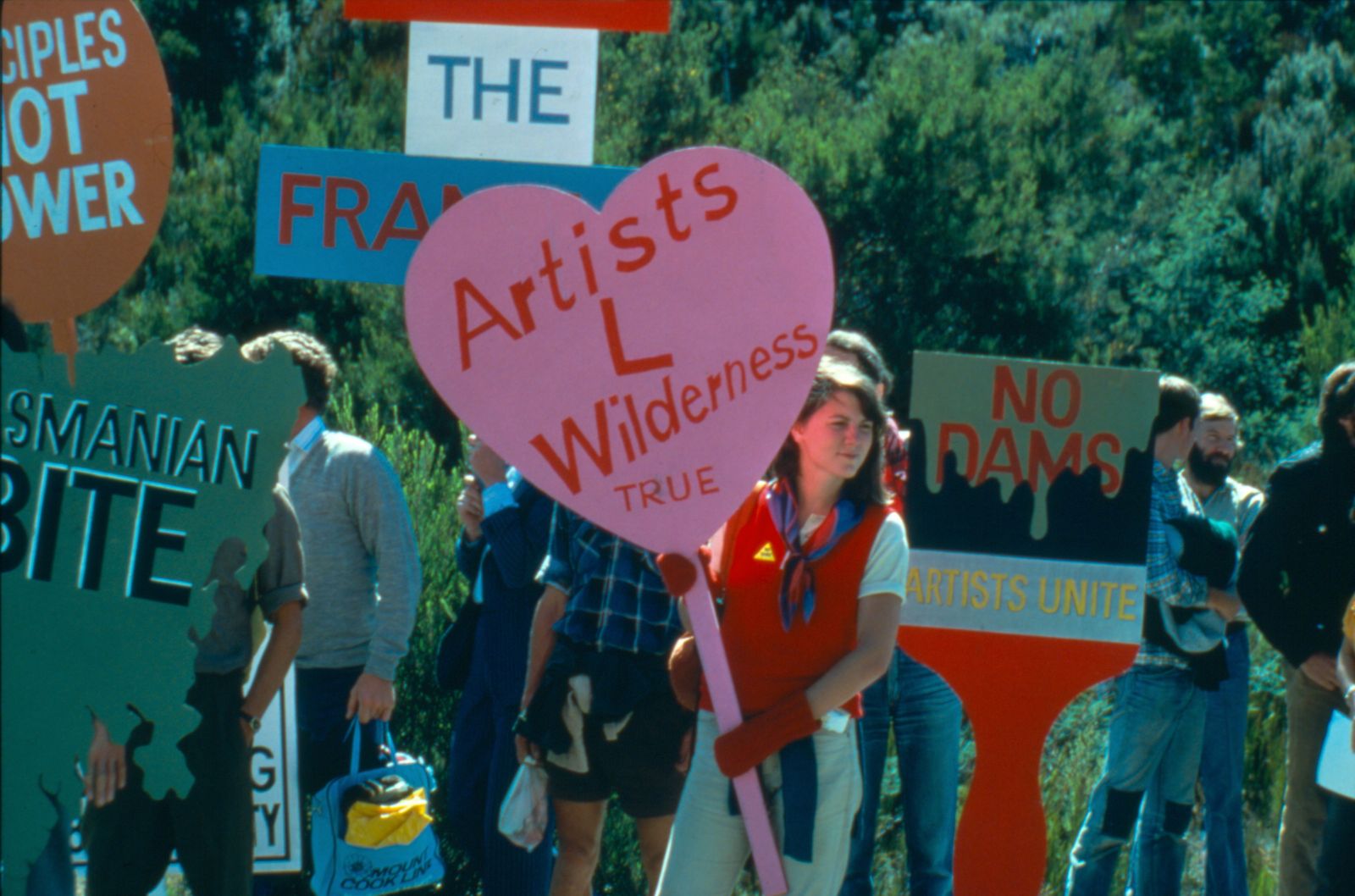
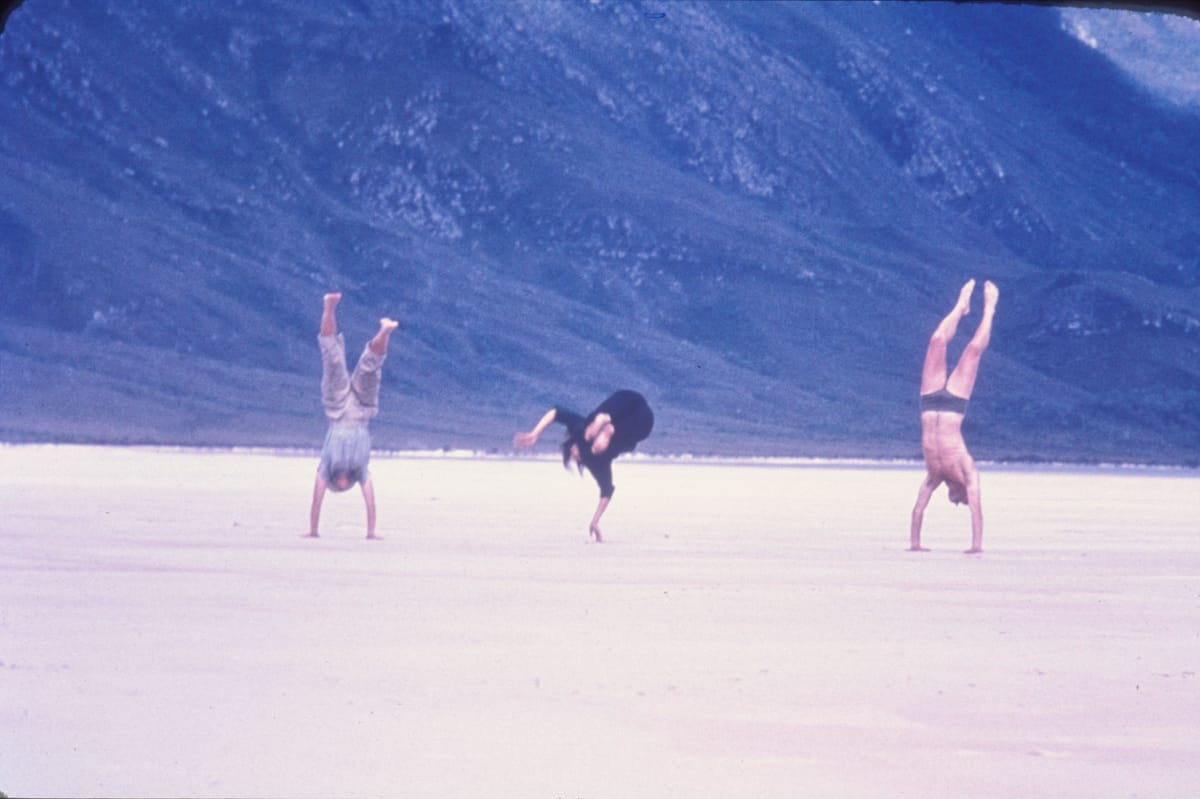
Image above from the Blockade Book: “G-Day Rally: Artists and crafts people do care” by J. Mounteney, 1983.
Finding the Wild Within
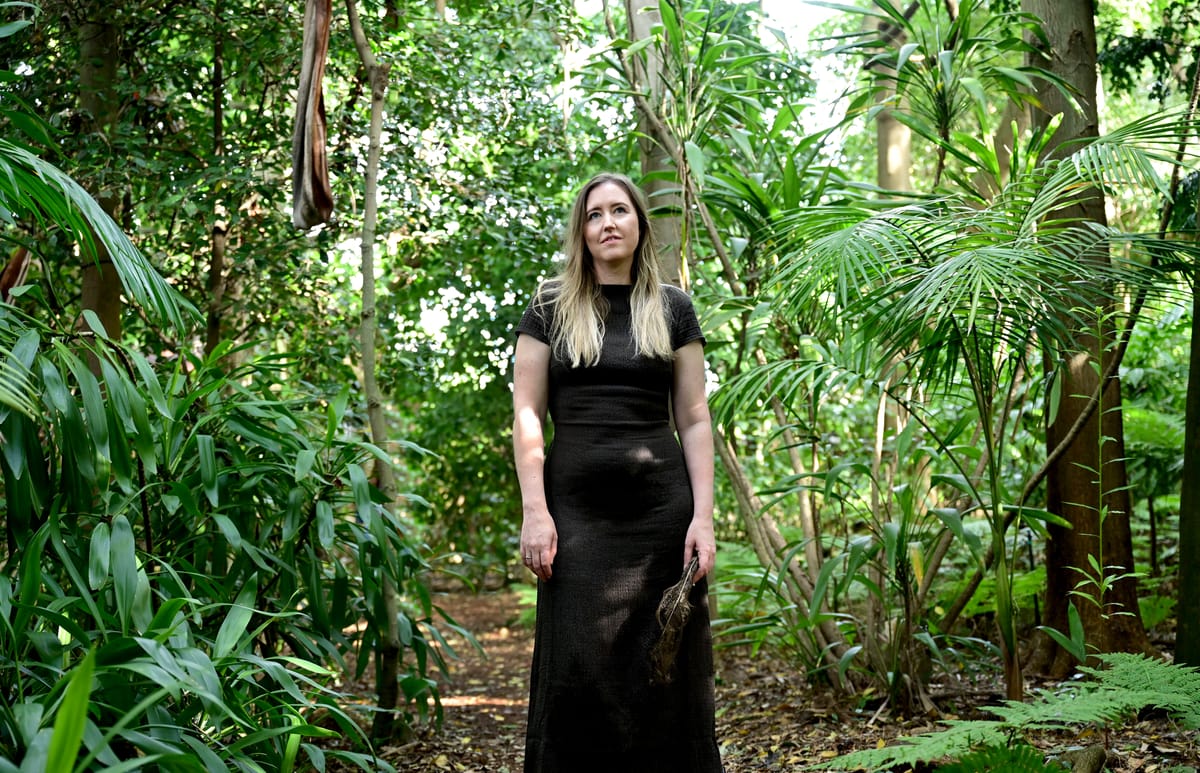
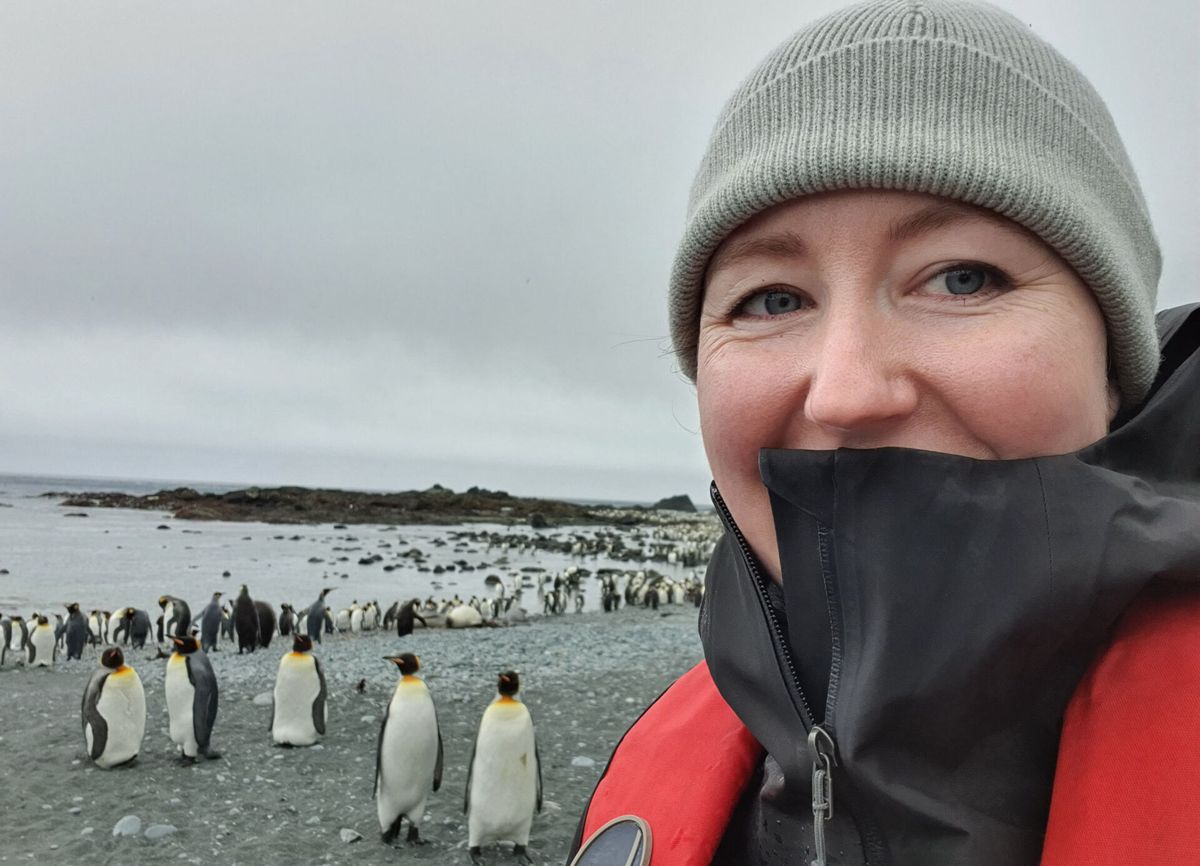
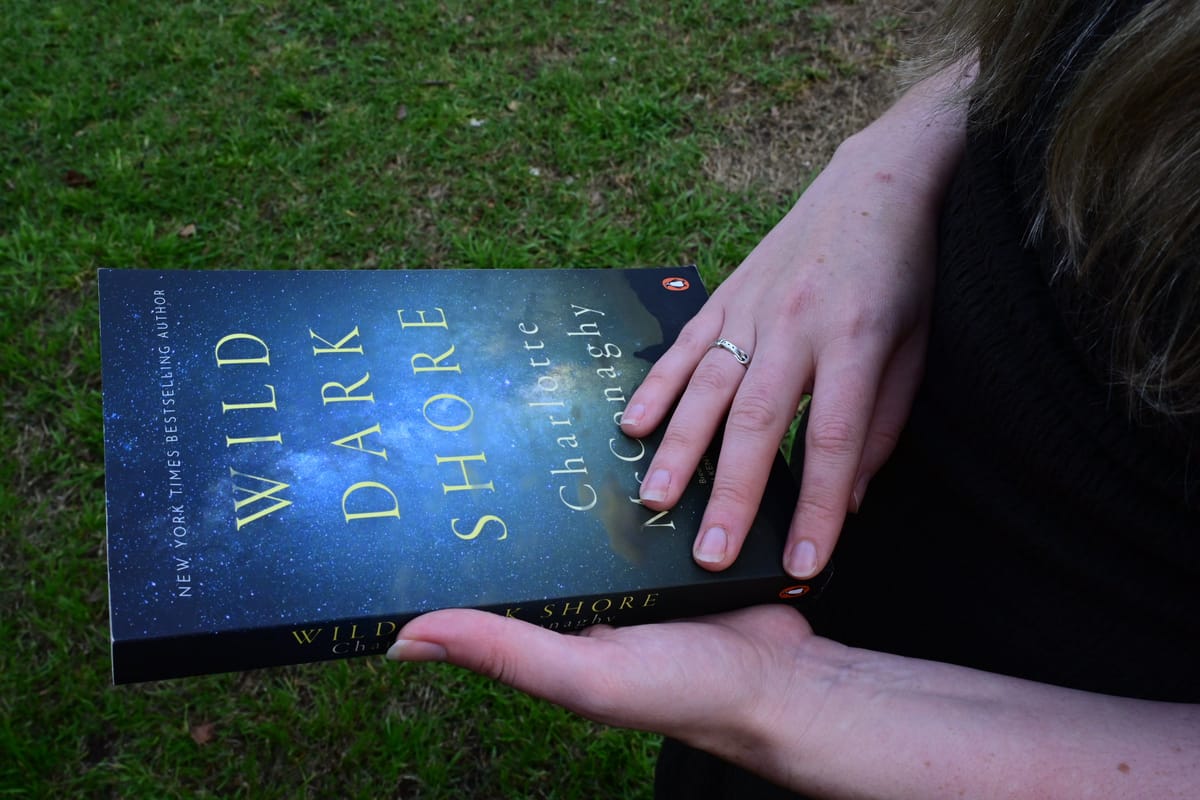
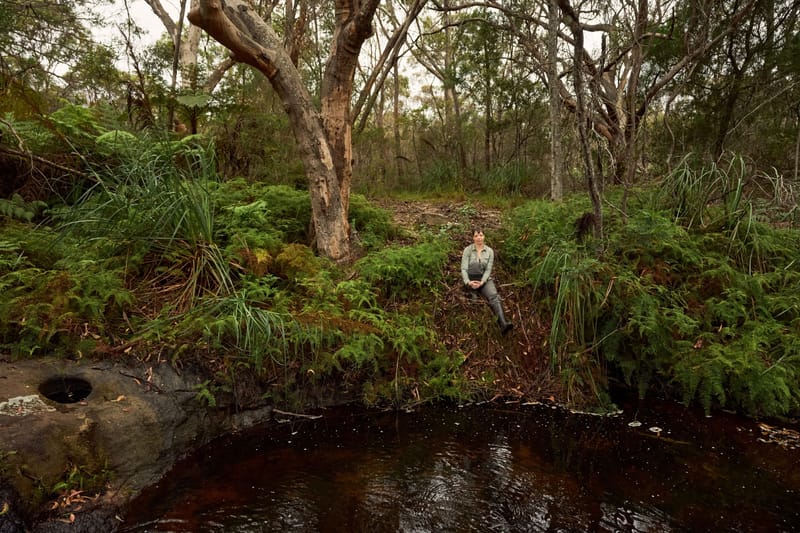
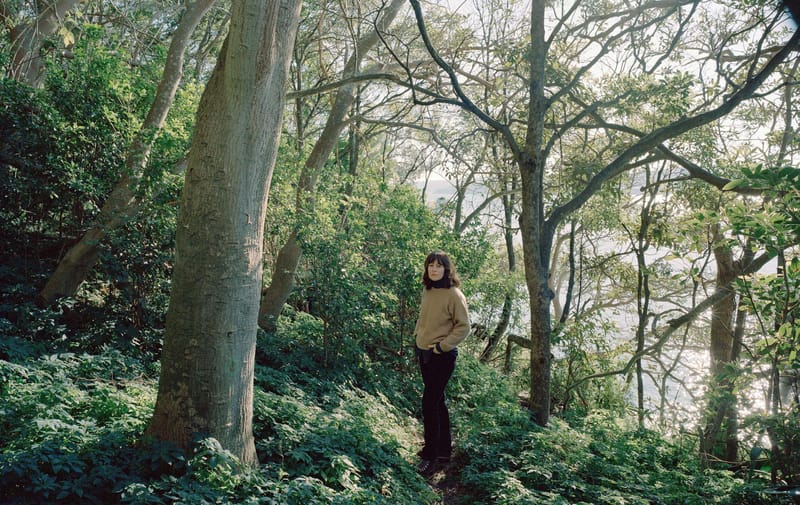
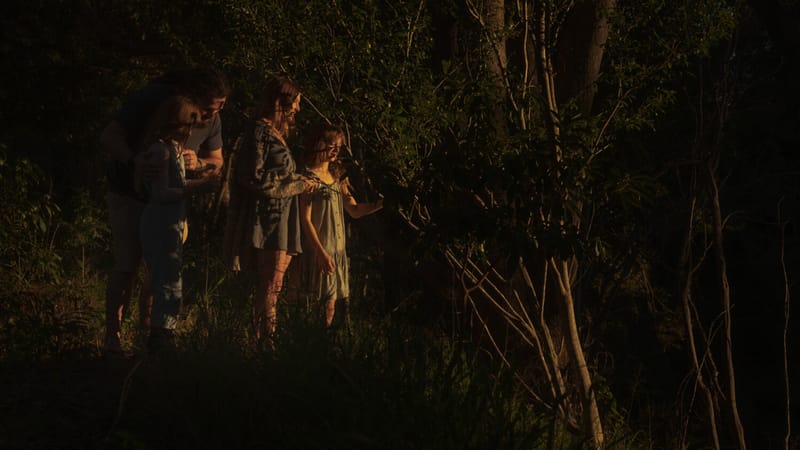
Charlotte McConaghy's novels are about love, loss and the wild within us all, and she tells our Lily Weinberg how birds, poetry and a single article on climate change led her there. From the elephant seals of Macquarie Island to choosing action over despair, it's a conversation about writing, and living, with hope. Photographs by Elise Lockwood
New York Times bestselling author Charlotte McConaghy writes gripping novels about love, wilderness, and the wild within us all.
She fell in love with nature through Mary Oliver’s poetry—learning how to treasure the simple moments of connection with observation of nature. From becoming obsessed with birds migrating across hemispheres to reading an article about climate change that changed her life and her work, Charlotte talks to us about her novels, her incredible trip to Macquarie Island, and so much more.
I have read all three of her novels—Migrations, Once There Were Wolves, and Wild Dark Shore—and loved them all. Her characters take on epic adventures to protect their loved ones and their environments. Each one is tethered in connection to nature and the wild.
Lily:You started writing very young, writing fantasy novels. But your more recent novels explore the human relationship with the natural world and how it's shifting due to climate change. I'm wondering what inspired your shift into writing about nature and climate?
Charlotte: I was writing these big, epic fantasy worlds because I wanted to write myself into adventure. The thing a lot of us long for as teenagers: big experiences, big life and big feelings.
I was roaming around Ireland, Scotland and England, discovering where my ancestors were from. As a kid, I had not spent much time noticing birds, but on this trip I was really struck by them. I wanted to know where they had come from, where they were going, and what these incredible migrations might look like and why they were making them.
And this emergence of a character and a story came about, and this was where Migrations started. I knew it was about a woman who, a bit like me, was wandering. She was searching for where she belonged, a sense of family and history and connection to landscape. She was migratory, a bit like the birds that she loved.
Climate change was a huge part of science and conservation, but it wasn't as frequently spoken about in normal life at this time. So I was learning about it, and I just really sort of couldn't stop imagining what the world might feel like if we sort of continue on this path. There was a specific, quite beautifully put, article, that changed my whole life. It was about how close we are to a world without animals, which just struck me as the loneliest possible world we could ever be in.
So it shifted the trajectory of my work and my life. I found myself writing about something that I was suddenly very passionate about. It has carried on through all my work. With Wild Dark Shore, I decided I wasn't going to write about climate change because it's too heartbreaking. And then of course I wound up writing a book that's very much about climate change. I have made peace with my preoccupation with the wilderness beyond us and within us.
Can you tell me more about the wild within us?
When I think about wildness, it is the interconnectedness, the harmony, that exists within a wild ecosystem. And when I say the wildness within us, I'm talking about something that connects us with that animalness of what and who we are: a necessary connection to a natural world around us.
My characters struggle with that because they are broken and wounded by loss. They're grappling with their own pain and their own struggle. But the wild within comes from having an innate, instinctive sense that healing comes from that peace, from that harmony, from that balance.
You’ve said before that Wild Dark Shore was a bit of a struggle for you at the beginning, but once you visited Macquarie Island, it began to fall into place. I was wondering how being in the place grounded you, or brought the story of Wild Dark Shore closer to you?
I couldn't find what the story was. It became very clear to me that it was because I didn't have a real sense of connection with this place—I couldn’t imagine it.
I had just had a baby, which is the main reason I thought I would never get to go to Macquarie Island because it's hard to get there—there’s only a boat 1-2 times a year.
I decided to just go for it, take a big risk and set off with my one-year-old and my partner down to the Southern Ocean. It was an amazing journey. I was filled with fear and a building sense of pressure because I had this one very brief moment to try and make sense of the book that was, at this point, long overdue.
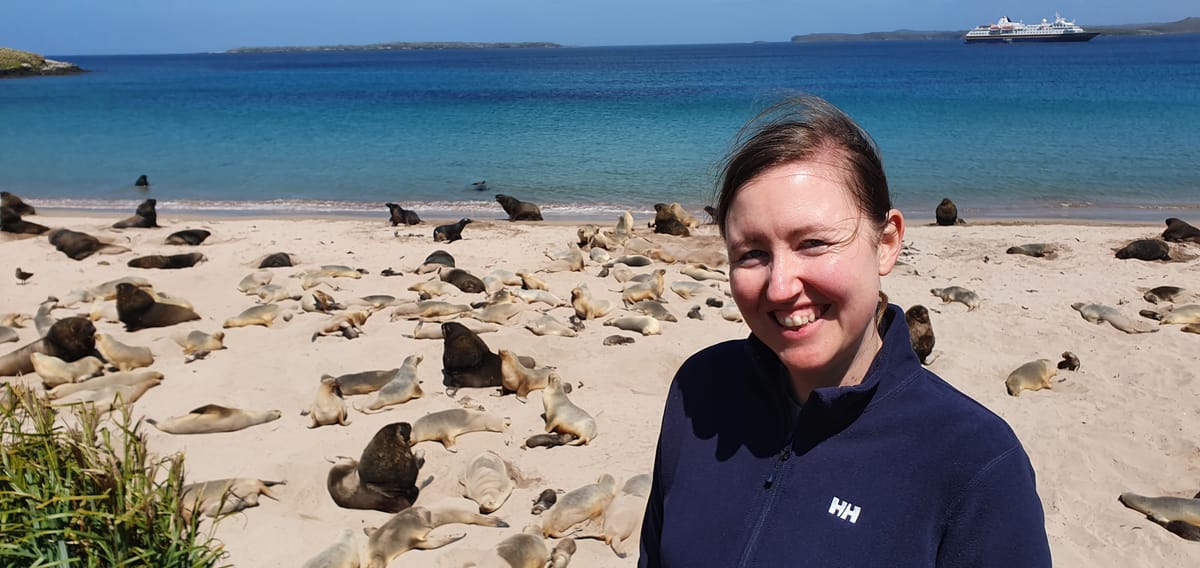
But the second we arrived, I remember stepping onto the black sand of this beach, and there was a wall of sound. Thousands and thousands of seabirds, royal and king penguins just by the thousands. There are huge elephant seals—the pups practice fighting in the shallows next to you, and some of the little ones come over and nibble your boots to say hello. Albatross soar low, and it just feels otherworldly—it is completely extraordinary the wildness, the richness of the wildlife.
Macquarie Island
And I remember this feeling of shock that a place like this could still exist where the animals didn't fear the humans yet. It's a feat of conservation that it is like that, because Macquarie was such a hot spot for the oil exploitation trade in the 1800s. They just completely decimated the island, wiped out a whole population of fur seals, and they were stuffing the penguins into these big rusting metal barrels to squeeze their oils out. You can actually feel that there, that blood spilt hangs in the air. The island has an incredibly haunted feel to it.
I could have never imagined that I would feel that way stepping off the boat. It completely transformed how I thought about my book.
I realised instantly that it was going to be a gothic story about a haunted family, on a haunted island. The textures came to life too, the colours—everything erupted in my mind and allowed me to sketch out a place that felt truthful and authentic and real.
How does it feel when something happens in the real world that mirrors your books. For example, it was announced in August that the Antarctic division is evacuating researchers from Macquarie Island because of the bird flu and exposing them to the mass death event that is likely to happen when bird flu arrives to elephant seals.
I kind of swing between hope and despair a lot of the time.
More important than how we feel is what we choose to do every single day when we wake up. We can get up and we can keep trying to do things that make a difference. Hope is only important if it leads us to action—to feeling energised, galvanised. It's very easy to feel like nothing's going to make a difference, but that's just a useless way to think about things. It's not going to help anything or anyone
I keep learning, and sharing, and thinking about what more I can do.
Macquarie Island
Has having children impacted your relationship with nature?
I wrote Wild Dark Shore after having had kids, you can see that in the pages. It's me trying to explore what it means to have children in a time of ecological collapse. When we're not sure what the future is going to hold for them, and how we grapple with that responsibility. How we talk to them about what's happening in the world, how we teach them about it, what we tell them about what we've done and what we haven't done. How we teach children about love and what becomes of love in the face of impermanence and loss.
You know, the big ethical questions around whether or not we should be having children at all. All of this stuff was really guiding me through the writing of this book.
I do feel far more of a responsibility and urgency now that I have children, but I also resent the implication that you only feel a deep connection to the natural world if you have kids. In Wild Dark Shore, I also looked at the idea that you don't have to be a mother to have an immense capacity for love and nurture—and that everyone has the capacity for that.
What nature books would you recommend?
I would recommend How to Fall in Love with the Future by Rob Hopkins.
I’m currently reading Merlin Sheldrake's Entangled Life which is all about fungi. Brilliant.
I loved Maggie O'Farrell's new book Land because it's all about a generation-spanning connection with the landscape.
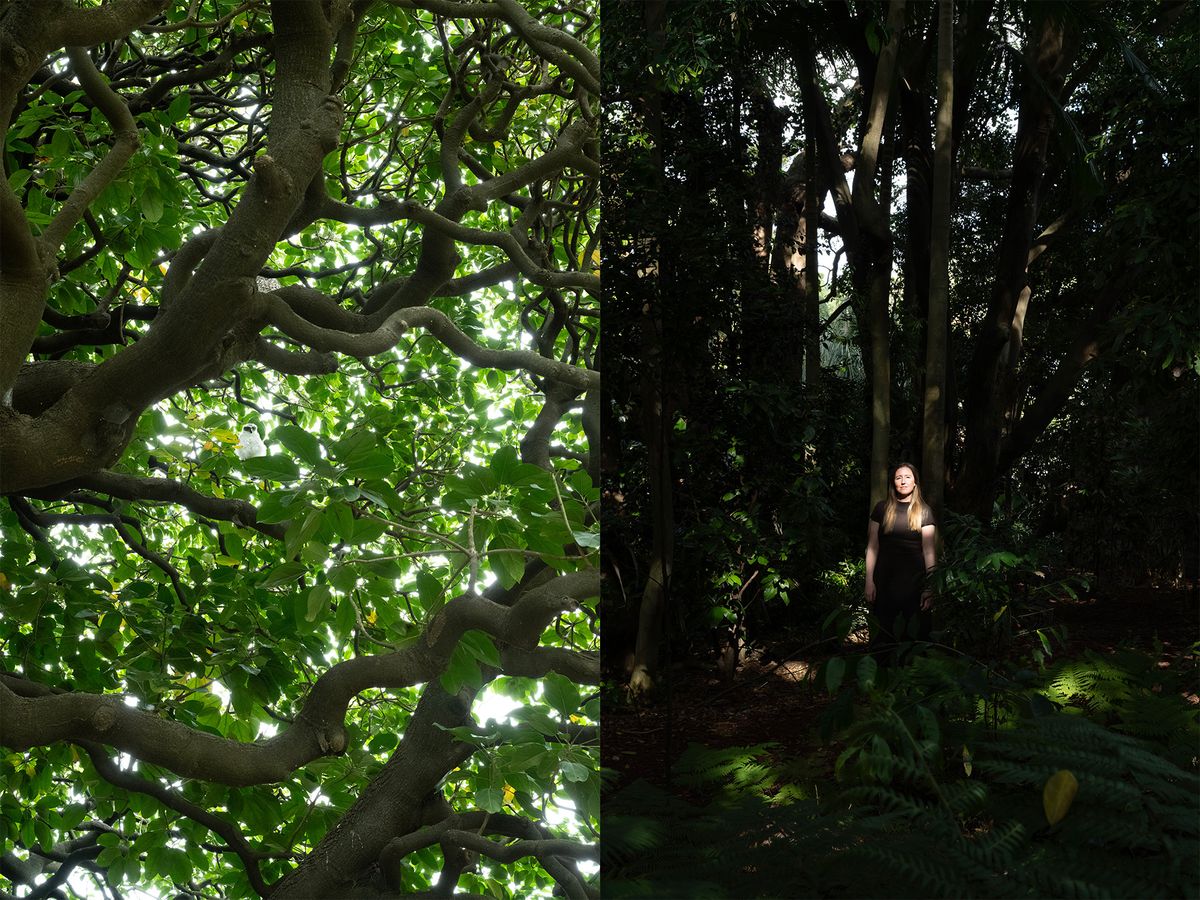
Thank you to Elise Lockwood and Charlotte McConaghy for meeting in the wild gardens in Sydney, and to the powerful owl family that joined us for some extra magic.
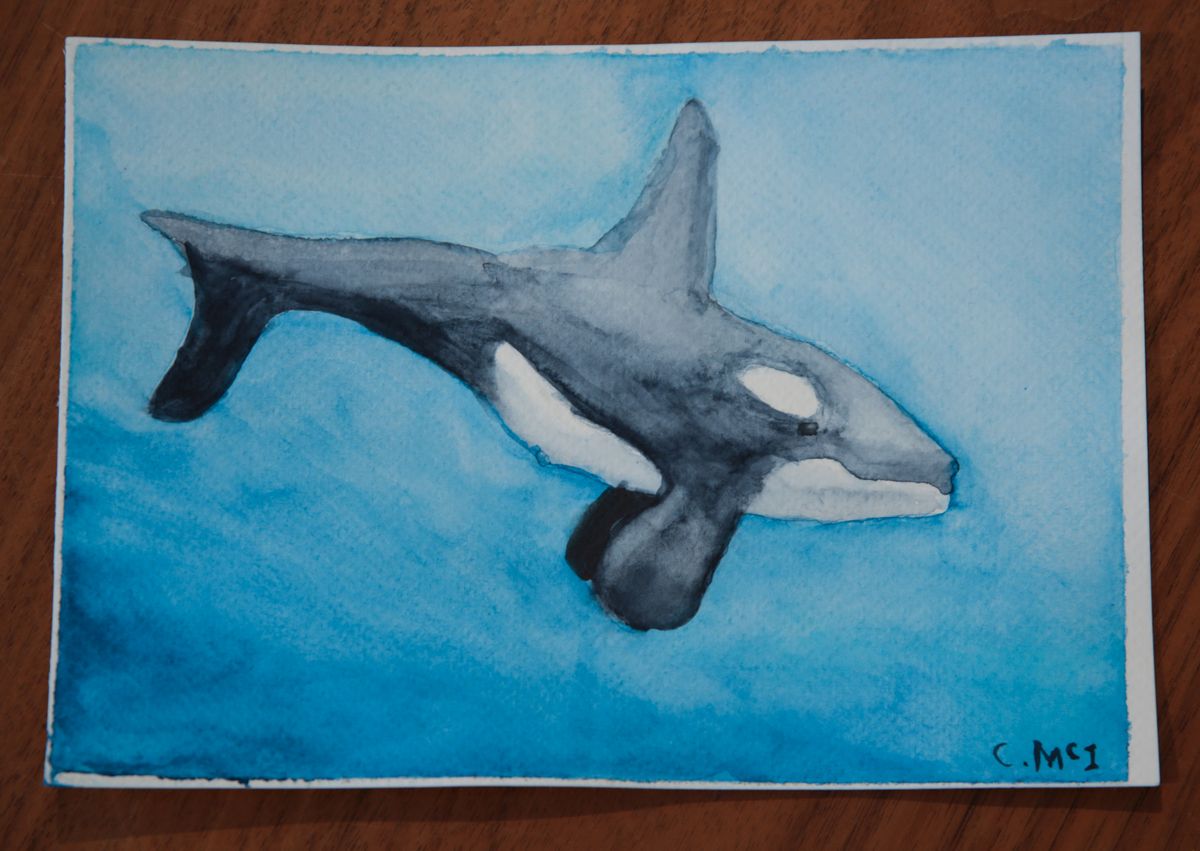
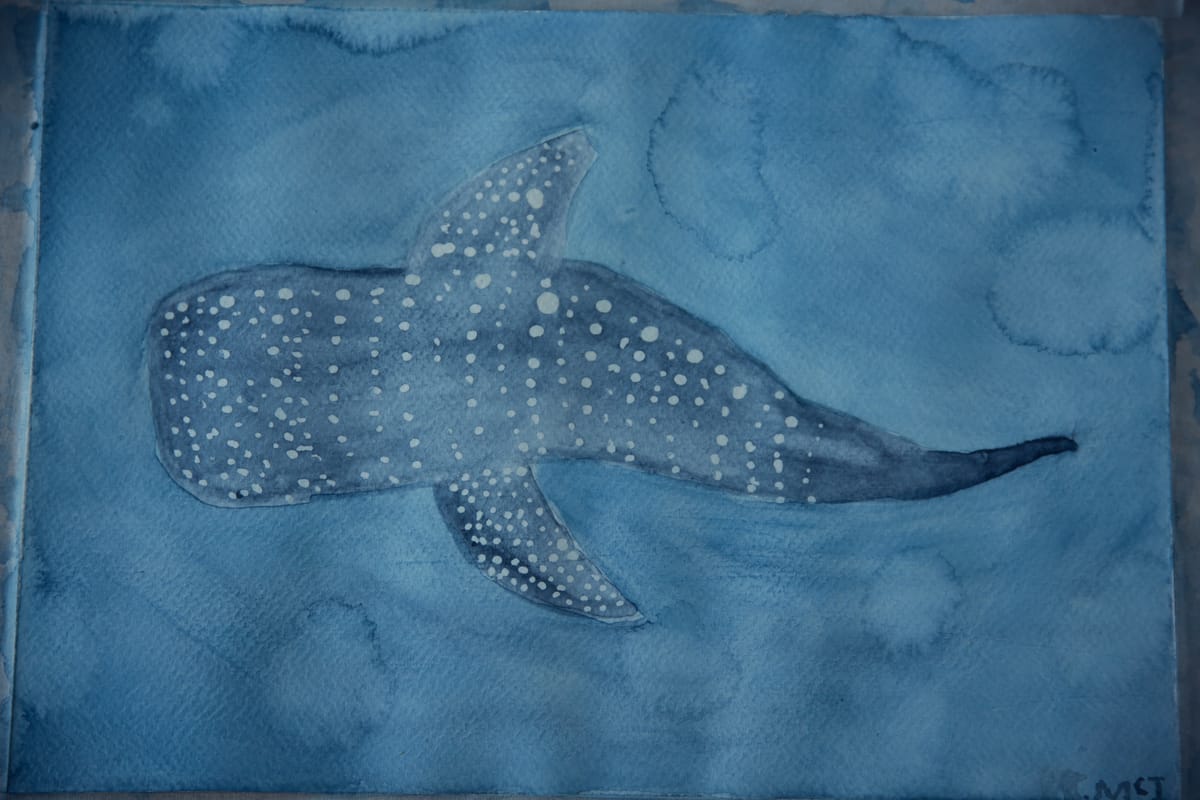
Nature Is The Story – Tim Winton talks with Connor McIntosh (11)
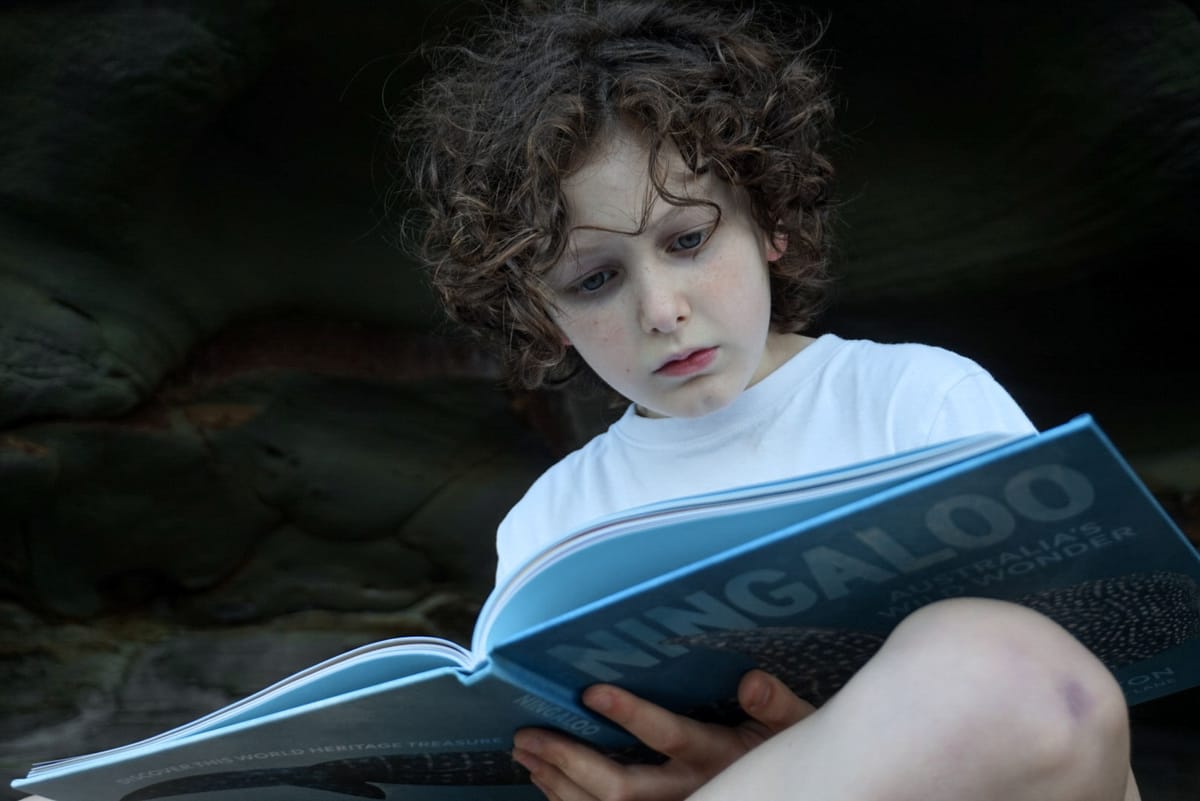
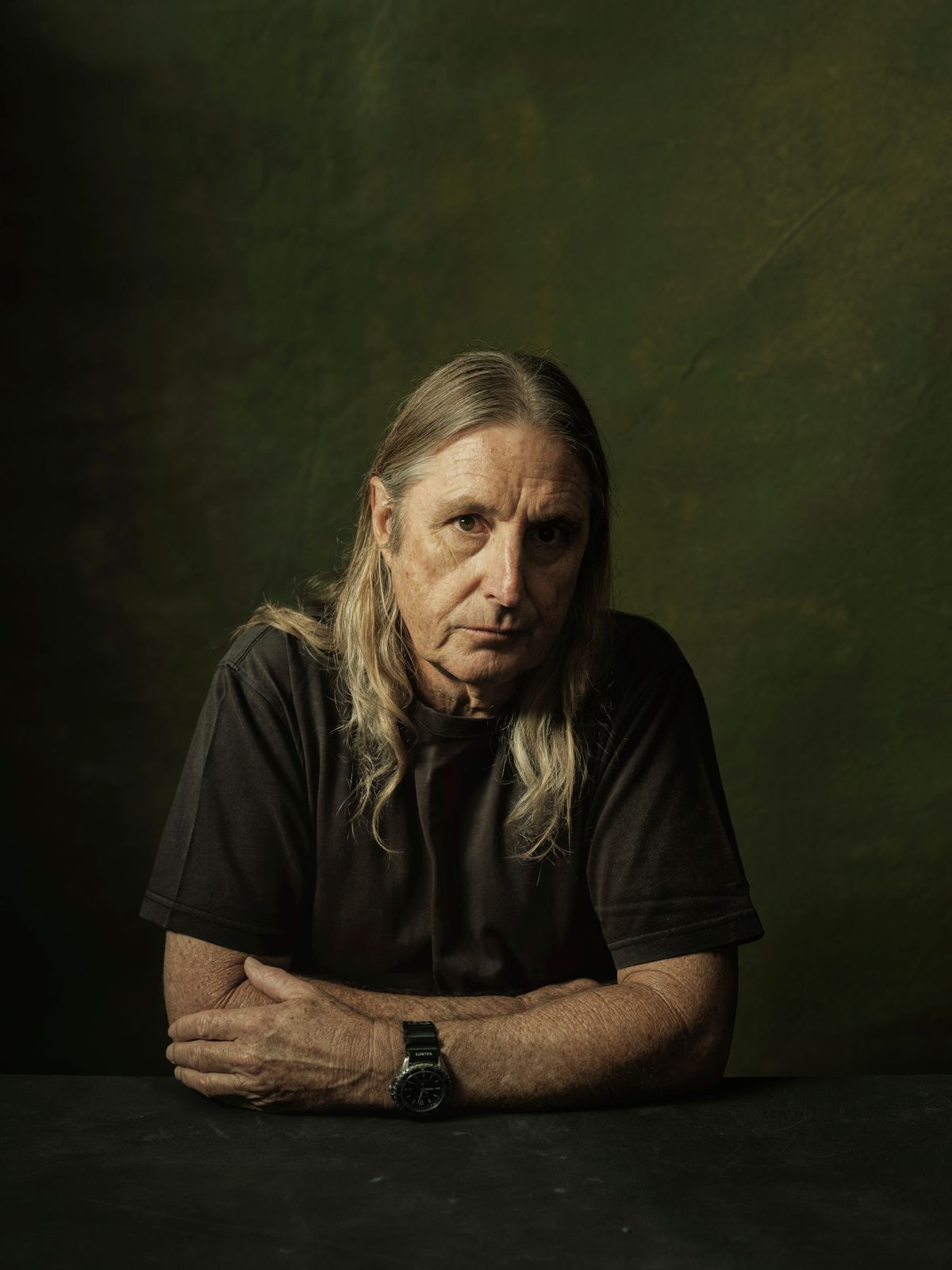
Photographs by Ryan Burrows, paintings by Connor McIntosh Photograph of Tim Winton by Adam Ferguson
Connor: You won the very first Environment Award for Children’s Literature in 1994, and now you are a winner again 32 years later! What do you think is important about the awards?
Tim Winton: Well, I think the awards help bring attention to our fragile environment, which is important. And they recognise books and authors who treat nature as important subject matter when so much of literature simply uses it as background. Nature is the drama, not just the stage—nature is the story.
I didn’t know orcas came to Ningaloo. What is your favourite thing you learned about Ningaloo while writing this book?
Yes, I always thought orcas were limited to cold waters—until I spent time with them over several years at Ningaloo. I think the most significant thing I learnt about Ningaloo is an important piece of geography: Ningaloo is where our continental shelf is narrowest. That means it’s the piece of Australia closest to the deep ocean. That explains why all these huge oceanic creatures are so close to land.
Photograph by Adam Ferguson
If you could be any creature in the reef for one day, which would you be?
One that doesn’t get eaten that day! Maybe a cleaner fish? Like the blue-streaked cleaner wrasse. Mostly because of all the other big creatures I’d meet every day: sharks, turtles, big cod, manta rays. Yes, I’d have to eat their scars and pop their pimples, but I’d get a little bite out of them now and then without getting into trouble. Sounds cool to me.
I really love to snorkel and seeing all the sea life under the water—what is the coolest thing you have seen diving in Ningaloo?
I’ve seen lots of great things, so it’s a bit hard to choose. I saw a newborn minke whale once—she was so fresh, all her afterbirth was floating at the surface around her. She was like a huge gummy—she was still a bit floppy. Her mum started teaching her to swim straight away, pushing her along with her rostrum (her nose).
You say in your book that Ningaloo is threatened by climate change—what could happen to Ningaloo and other special places in the ocean because of climate change?
Sadly, global heating is already having a serious impact on Ningaloo. In 2024-25, we had a massive global marine heat wave. The northern parts of Ningaloo Reef lost almost half of their corals. Seagrasses were cooked too. Climate scientists have said that if we keep burning fossil fuels at our current rate, there will be almost no corals by the end of this century. I won’t be around then, but you and your kids probably will be. We need to save what we can, while we can.
In ‘Ningaloo’, you talk about the way that human activities are threatening the species that live in the reef. What are the ways that humans can protect this sealife too?
First, we need to treasure these animals and ecosystems with the respect they deserve. They are irreplaceable treasures, so we should treat them as treasures. That means not treating them as disposable stuff. We need to fish responsibly. To stop putting industrial developments in ecosystems that can’t cope with the pressures they bring. We should put the health of those creatures first in all our decisions. Sadly, that doesn’t always happen. Right now, developers are trying to build an industrial port in the middle of Ningaloo’s whale nursery. Things have gotten much better at Ningaloo, but we still have to deal with people who don’t get it or don’t care.
Thank you to Tim Winton for his unswerving, unmatched dedication to our wild places and his fostering of a love of reading. Thanks to Connor, our youngest yet contributor, for the interview and the beautiful paintings inspired by Ningaloo. Thank you to Adam Ferguson. Read more about Wilderness Society's long history of campaigning for Ningaloo here.
Where The Magic Begins
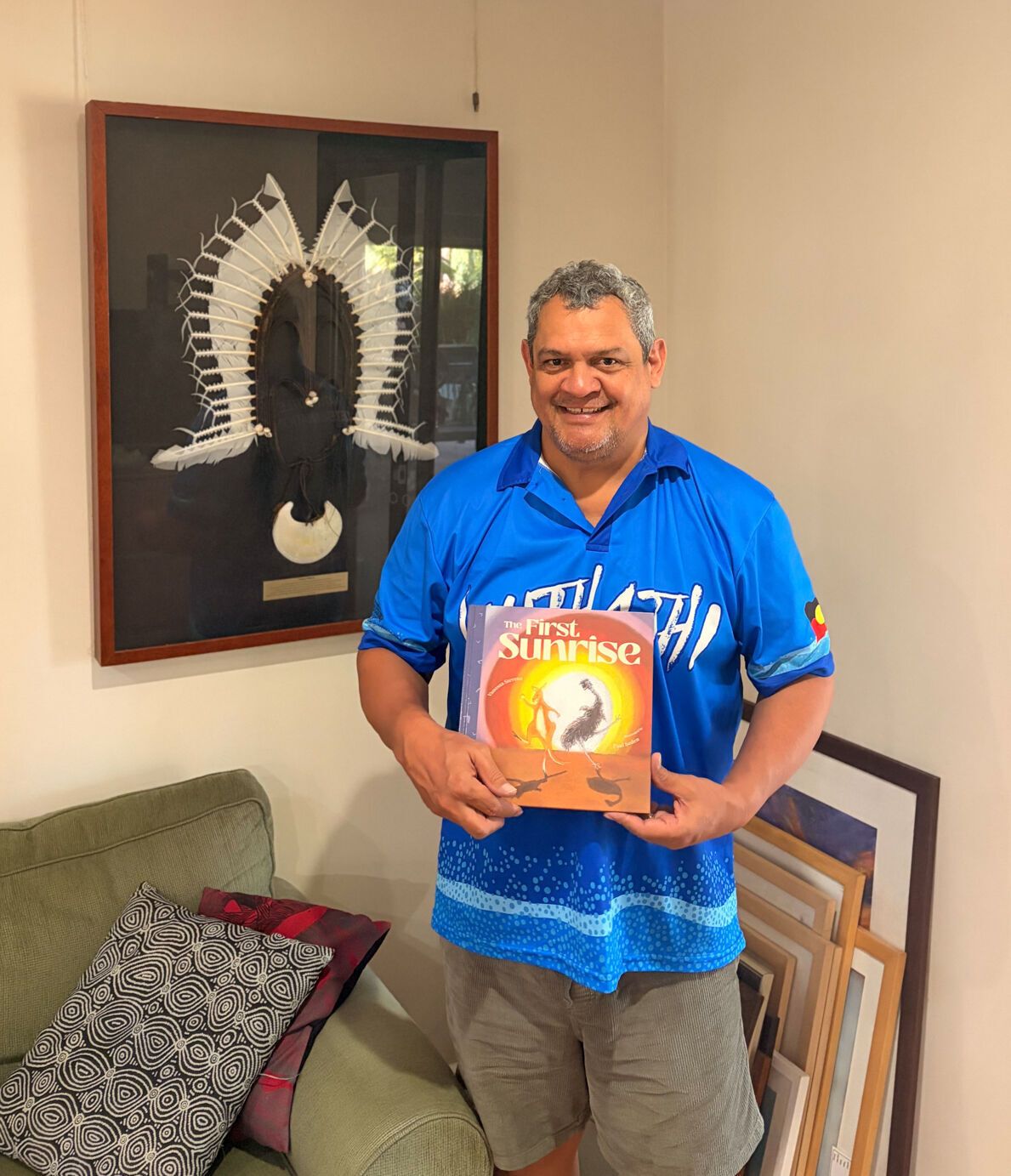
Words and pictures by Paul Seden.
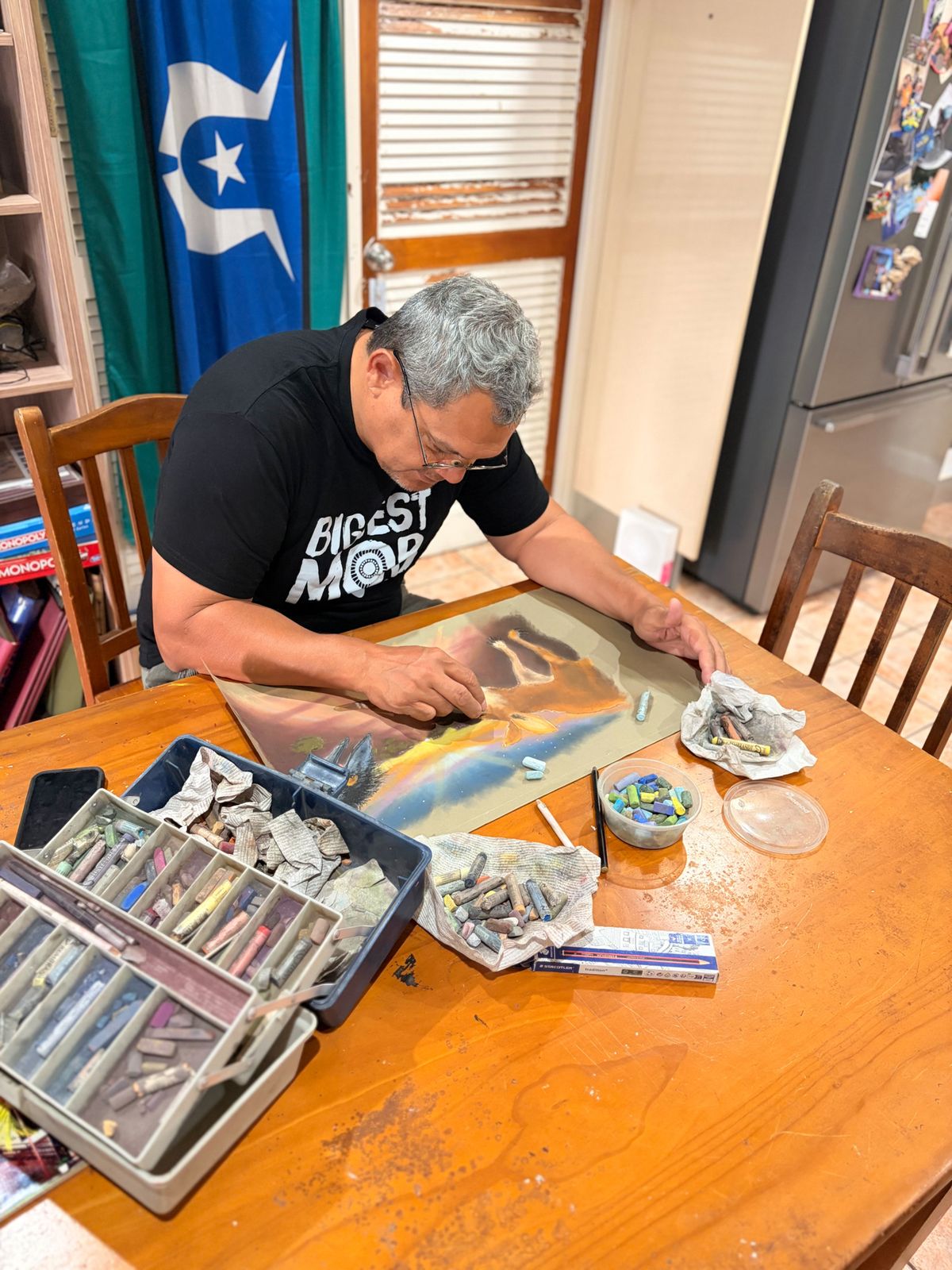
Paul Seden is descended from the Wuthathi and Muralag people of North Queensland. He grew up in Darwin and he loves to draw and tell stories. He is inspired by the adventures he has with his family in the creeks around Darwin. He shares how he matches a medium to a manuscript, and why chalk pastels were the right choice for the vast escarpments and open plains of The First Sunrise.
I am not your run-of-the-mill author/illustrator. In saying that: are any of us? I loved to draw, and, like most with this art genre on the mind, didn’t have a chance to map out a career early in the piece.
At 40, I thought wouldn’t it be good to back-track and illustrate a children’s picture book? Who doesn’t want to follow in the applications of Ingpen, Trezise and co. I had illustrated before, in an amateur setting: kitchen table. The subject matter was birds, landscape and the odd whatever-was, mainly in chalk pastels.
On a Friday in 2012, I looked online and found a competition for new First Australian authors and illustrators. Enter your illustrations and manuscripts to win a publishing contract, so I took a shot. Not knowing a medium to use, I went basic: lead pencil and acrylic. The illustrations are okay, but I had to write manuscripts. I put two in: Kick with My Left Foot and Crabbing with Dad. The Journey had started, after winning a contract with Kick with My Left Foot. I didn’t illustrate that one.
The process of developing a children’s picture book can be arduous. Yet, if it’s a big interest, it’s exciting. The publisher sends you a manuscript; if you agree to work on it, the contracts are signed and you clock on. The first step is the rough, 32 small pictures, pages, sketches of the idea you have. The publisher agrees, then you make a sample in colour. This is the time for the medium.
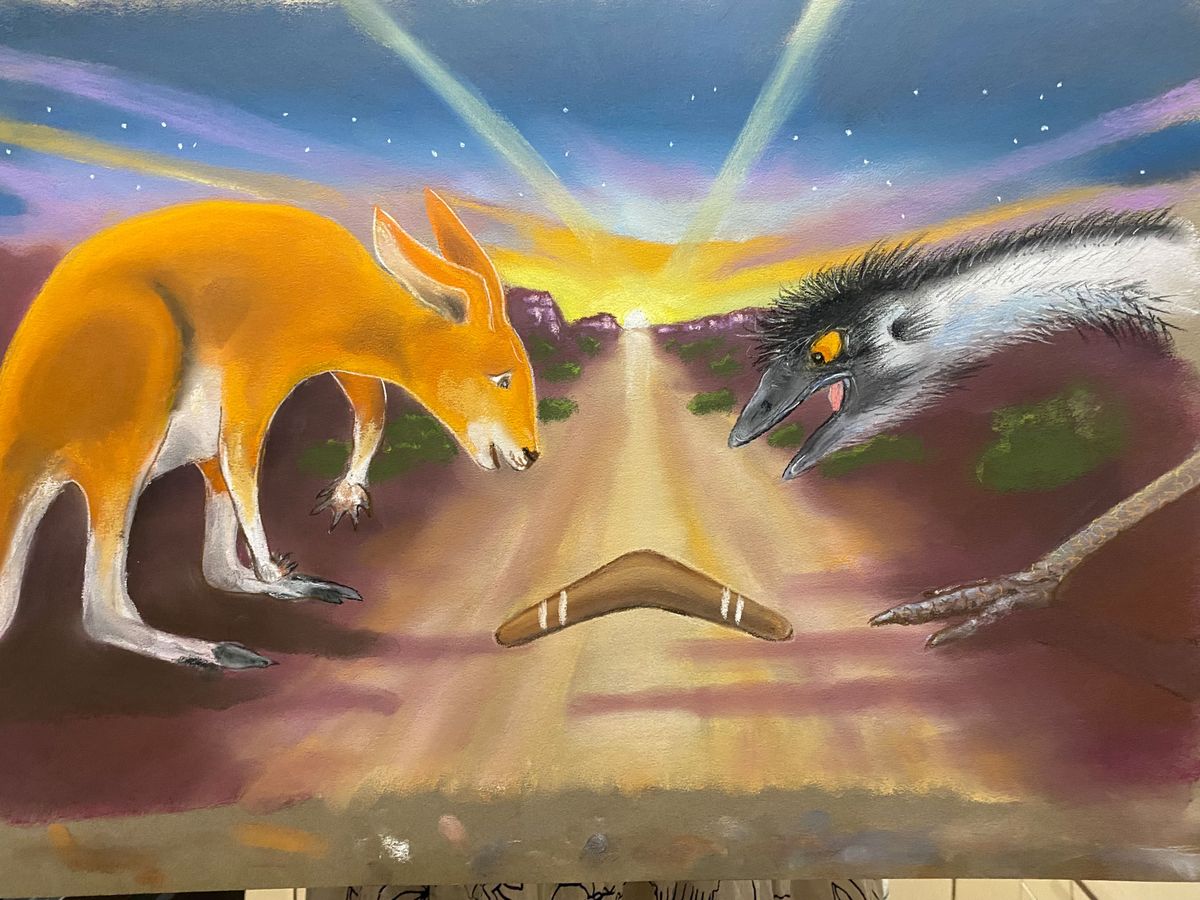
Each artist in book illustrating does have their own style. I read a manuscript and play the words through a medium. A grandma book is soft, so watercolour; an upbeat action is acrylic; a timeless piece like The First Sunrise is soft pastel.
When I read the manuscript for The First Sunrise, I thought of chalk pastels. The reason being, escarpments and open plains would be magnified beautifully. This was a peculiar project, as the rough draft had been done by another artist.
I kept to it best I could; sometimes your flow goes in different directions. Each picture may take an enchanting direction, but the publisher won’t let you get too far off the reservation.
Once the originals are finished, they are sent to a designer where the magic begins.
The First Sunrise is just that.
Thank you Paul for this lovely story about the making of your book. Check out the book here.
The Franklin Blockade by the Blockaders
Photographs from the Wilderness Society archives, interviews by Rachel Knepfer.
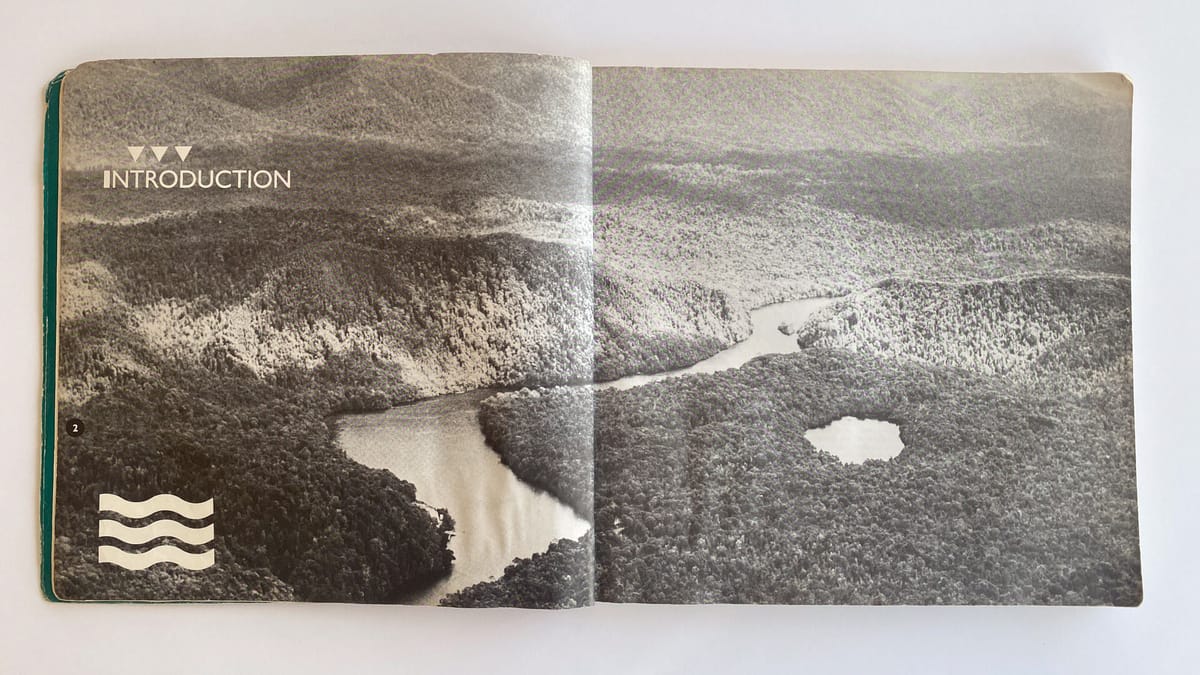
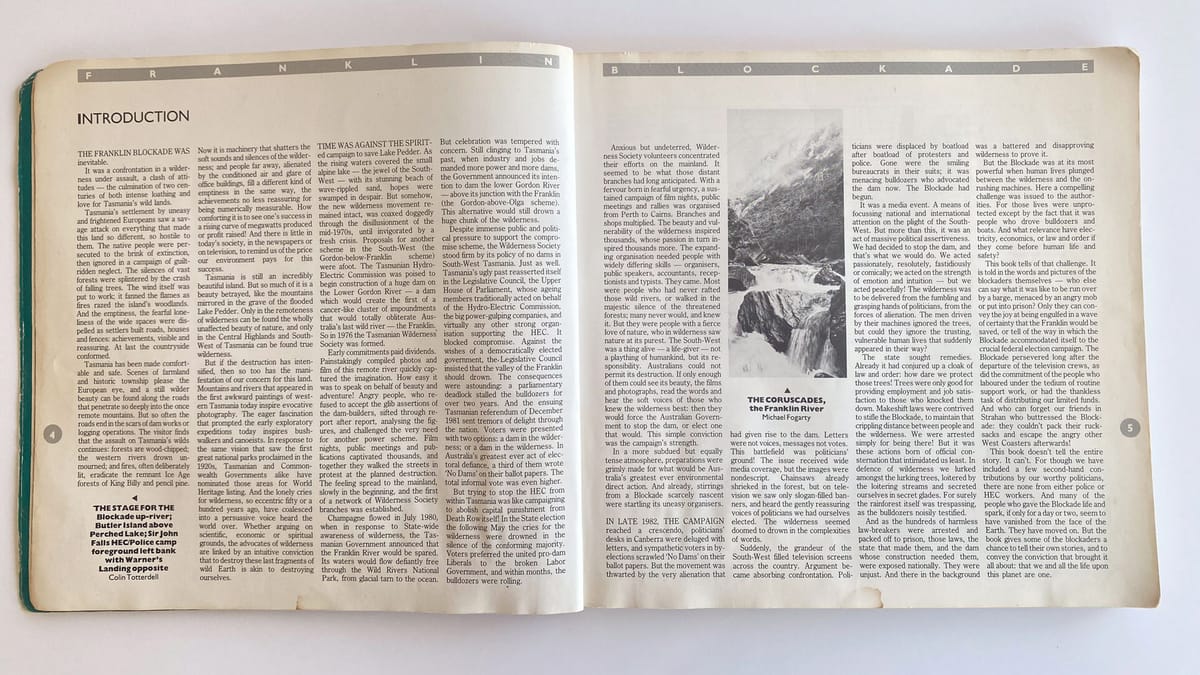
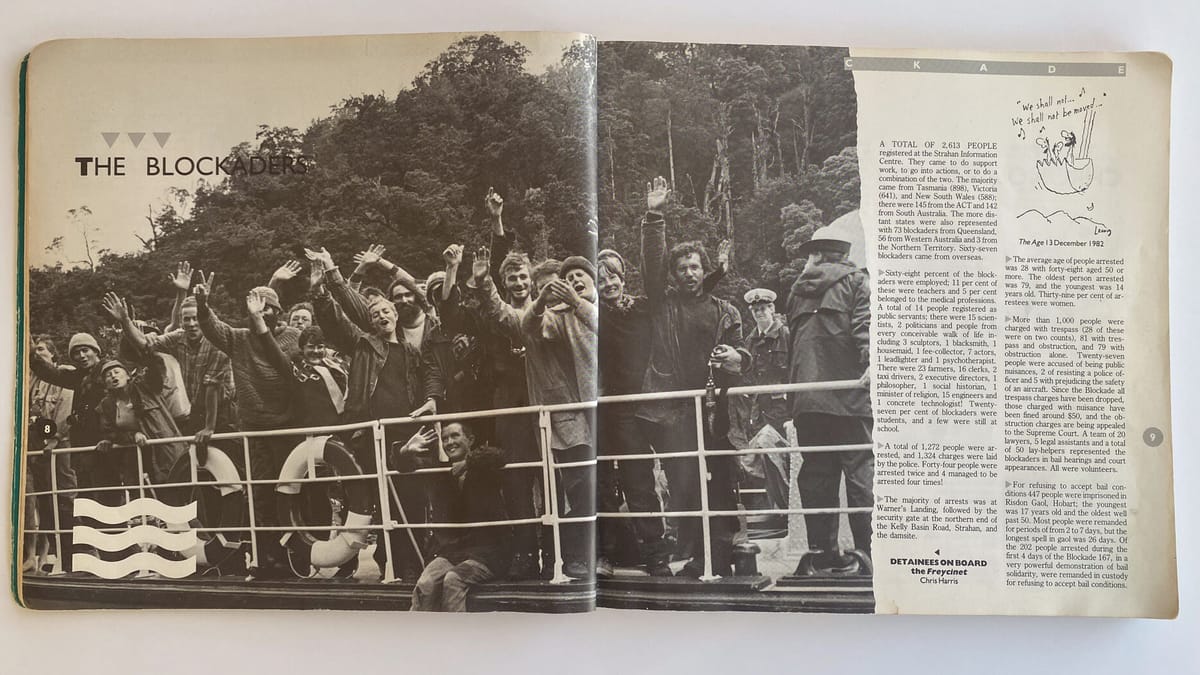
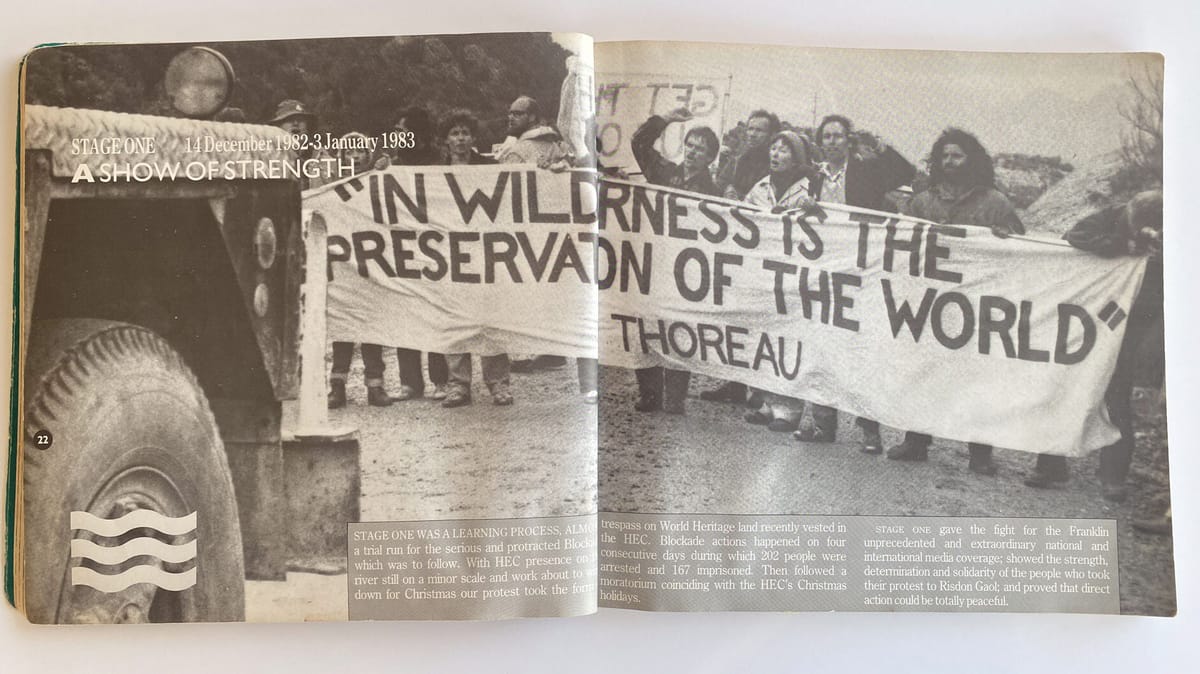
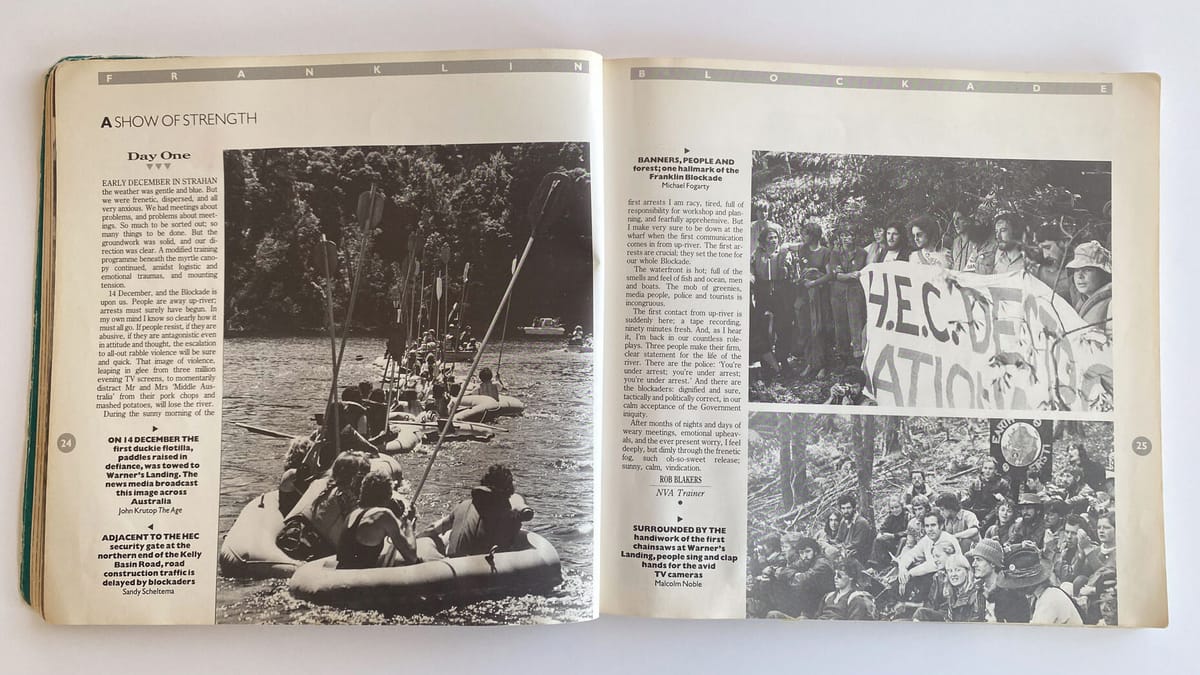
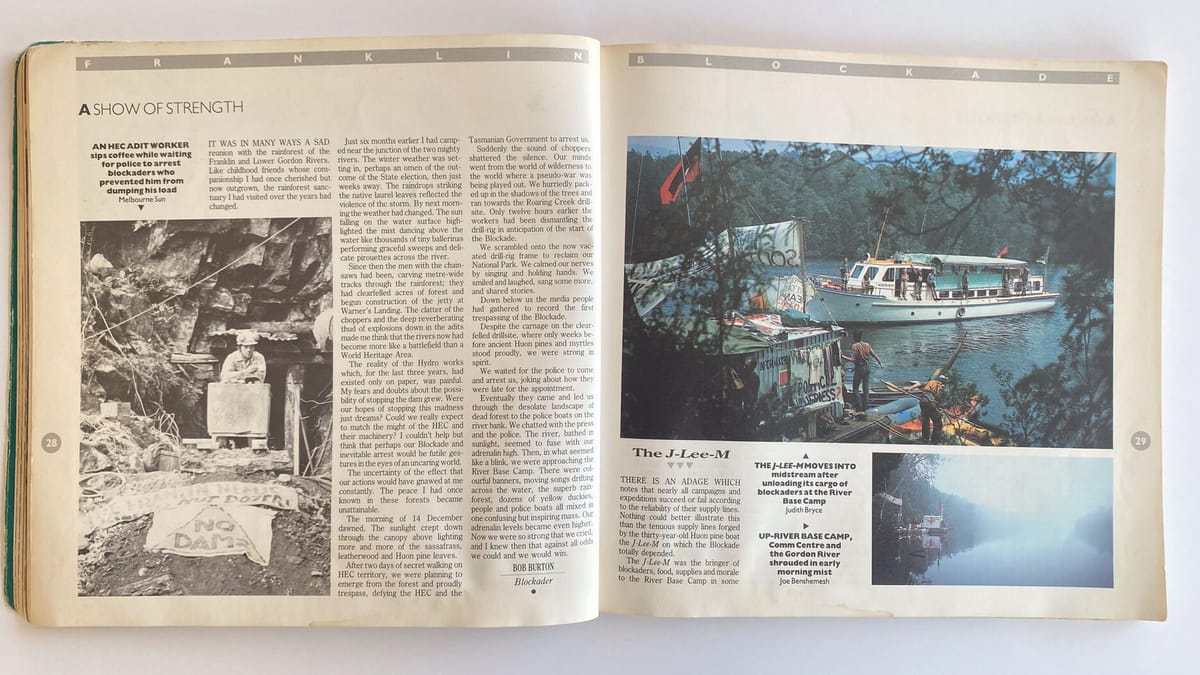
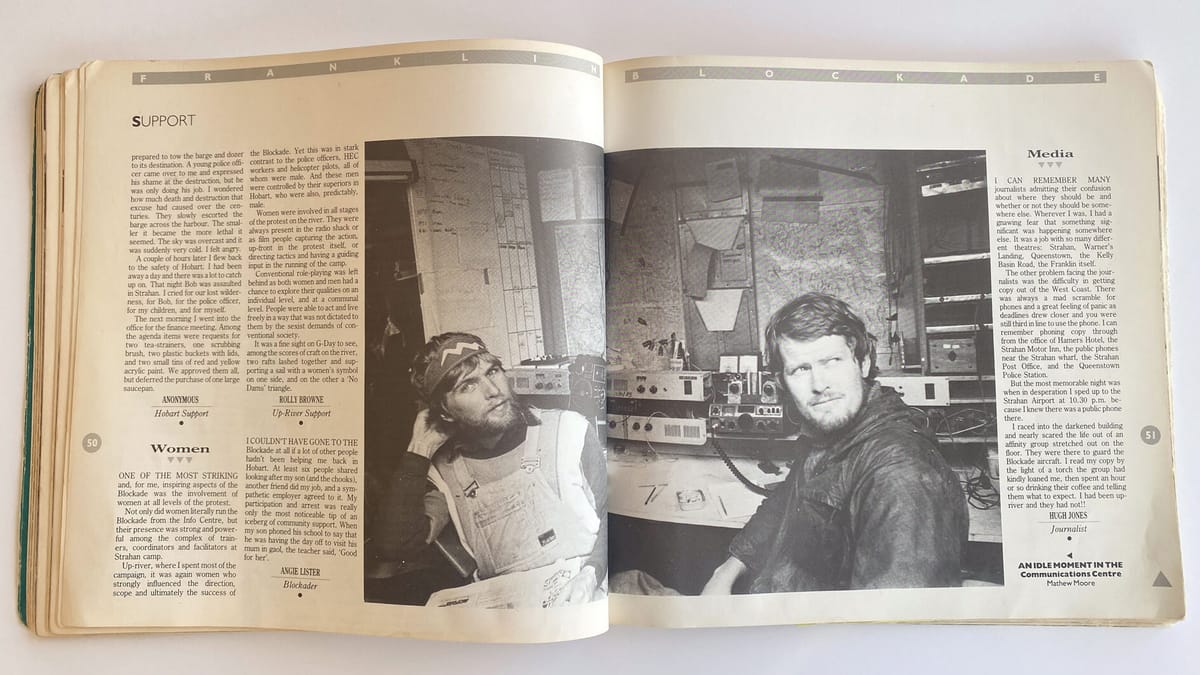
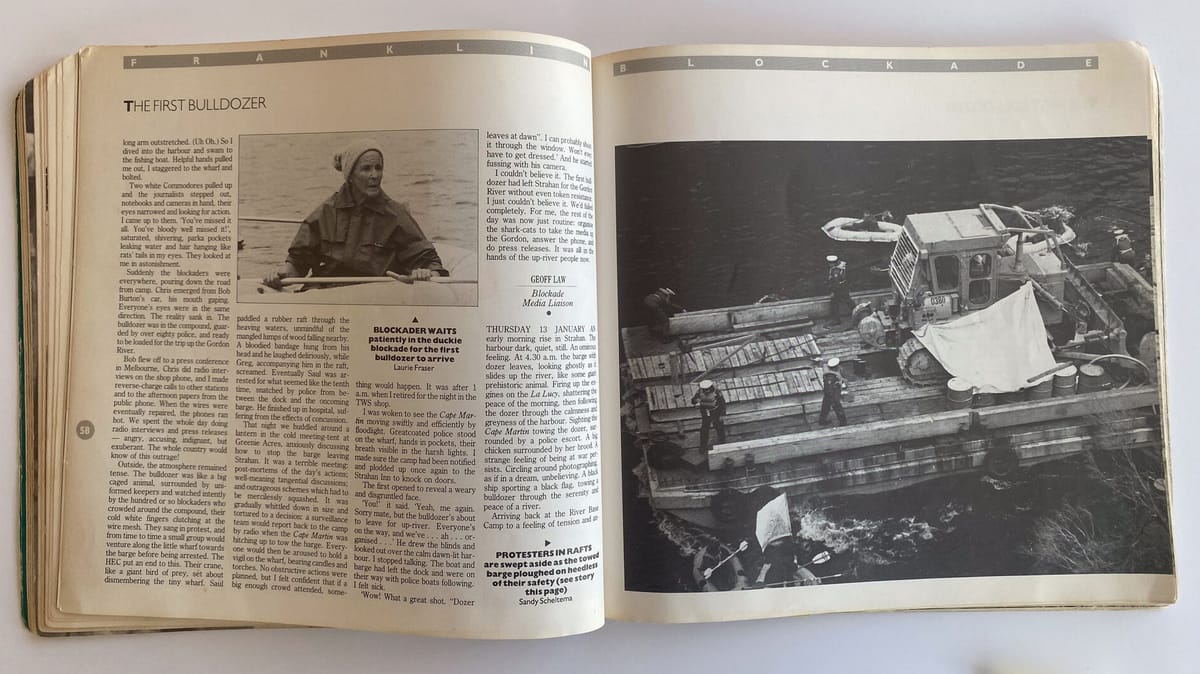
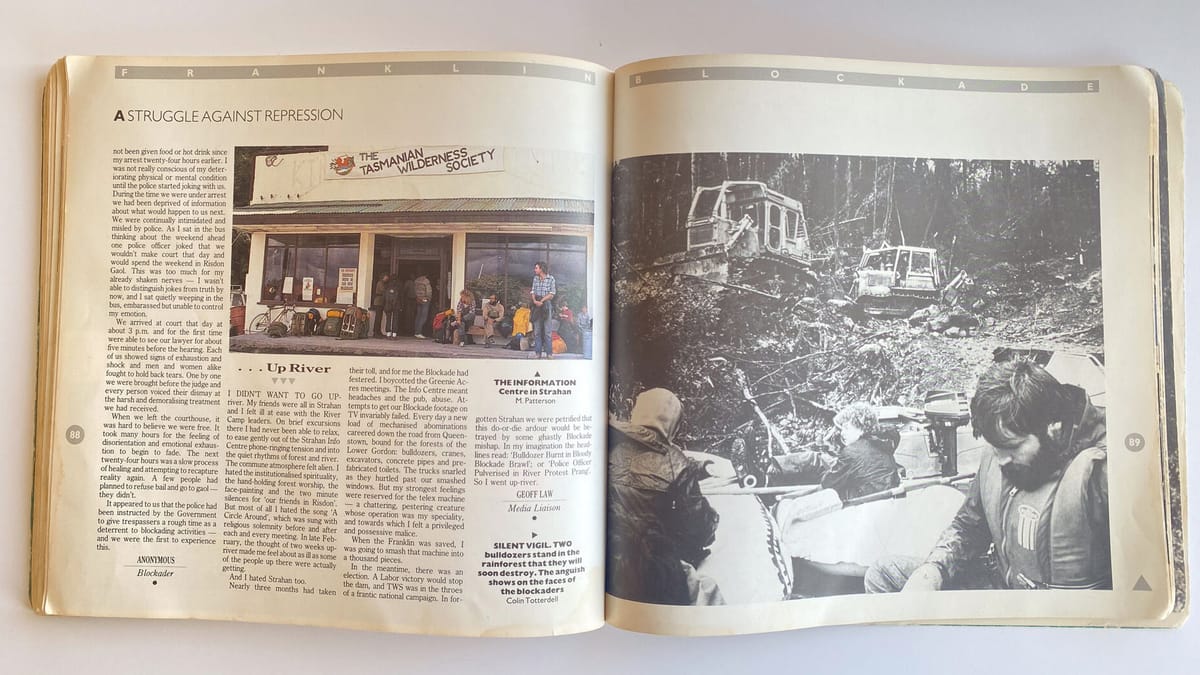
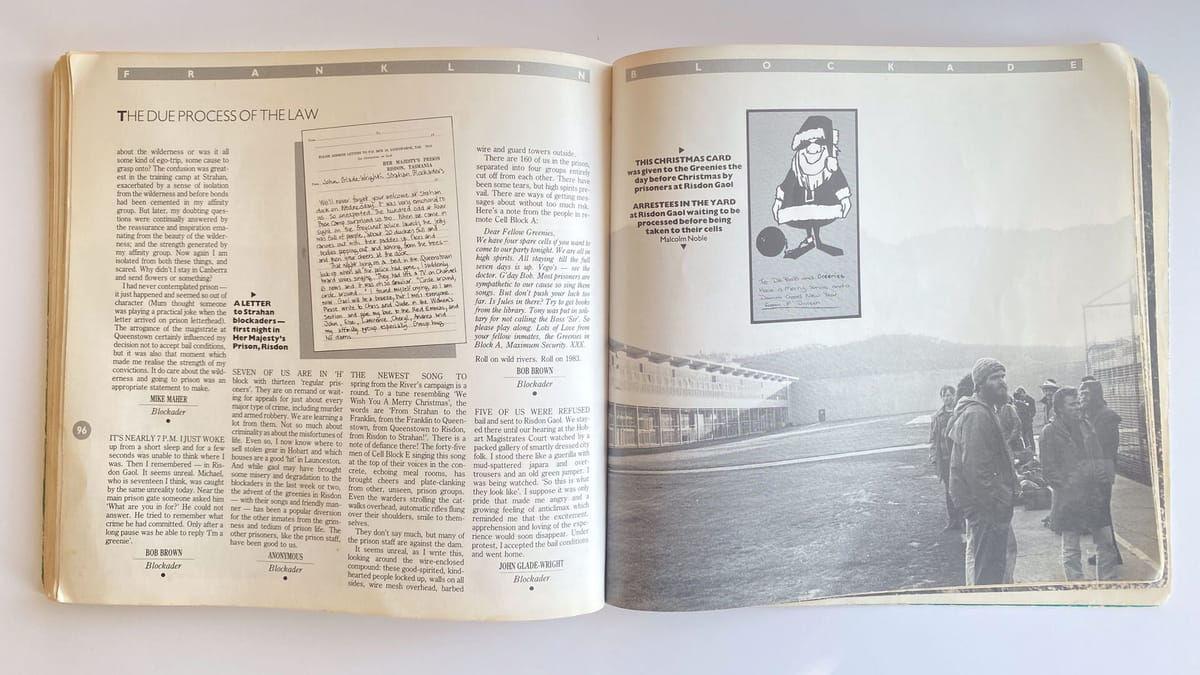
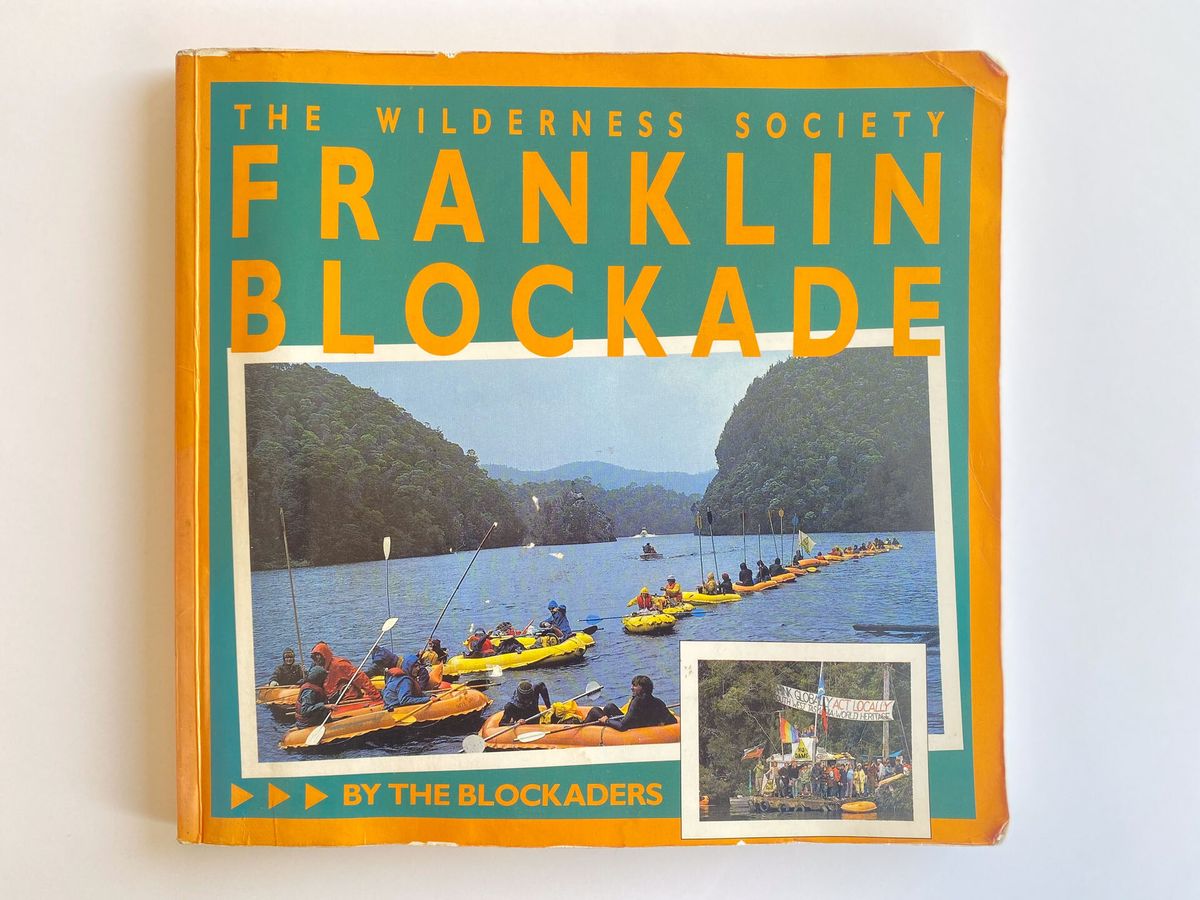
This book, published by the Wilderness Society immediately after the saving of the Franklin River, “tells the story of a challenge to those who would destroy wilderness. It is told in the words and pictures of the Franklin blockaders themselves: people whose senses reeled in the hectic din of the bulldozers; who swam in front of machinery-laden barges and boats; who confronted mobs manipulated into anger and hatred; and who laboured under the tedium and stress of support work. It is the story of the largest peaceful direct action Australia has ever seen.”
In our fiftieth year, we are happy to give this long-out-of-print book a new audience. We talk with some of the key people who made the book: Robin Tindale, Ian Skinner and Lilith Waud.
Thank you, then and now. Over to Robin, Ian and Lilith and the voices of the blockaders.
Robin Tindale at Davey Street
Robin Tindale, August, 2026: We’d come through the blockade and the Franklin had been saved and it was a situation of: what do we do with all of this, all these incredible images. Thousands of people were there. They all had their stories. This is a story that should be told and recorded. So, Pam Waud, who is now Lilith Waud—it was her idea. The idea of making a book, The Blockade Book, told by the blockaders.
So word went out through our newsletter, for people who had photos or who wanted to submit stories. And Lilith and I, our job was to look at the stories—collate them and put them together in a cohesive way. So, all of these letters came in with stories, and we had to decide how to put it together so that it made sense.
Rachel Knepfer: And then, of course, this was all opening envelopes—it was all physical.
Yeah, of course. Absolutely.
Lilith (Pam) Waud—she ran the show. She had the big picture of where she wanted this project to go. I worked with her editing the text and we wrote pieces to go in there. Ian Skinner's job—he managed the photos for a while. He's a photographer and he was editor of Wilderness News as well. He collected the images and decided which ones would go in and which would best tell the story of the blockade.
And Geoff Law, of course, is a wonderful writer, so we got him to write the introduction and he wrote some of the pieces in there as well.
Could you tell me just a little bit about Pam/Lilith?
This was not that long after I met her at the blockade. She was a blockade organiser. She and Cathie Plowman and Ian Skinner organised the blockade. Very dynamic woman.
She was incredible; she's an incredibly capable woman. She was English. She moved to Sydney in the mid-70s and came down here to get involved in the Franklin campaign.
What was your history?
I was there, and I was going to be involved. I was young. I'd been to uni, I was living in Hobart, I got involved during the blockade. I was interested in graphic design. Lilith said, come on, come on board, you could help with this. And so I did. But as I said, it was absolutely her vision. She knew what she wanted.
There were so many very talented people around—as there are now. The organisation attracts such incredible talent in so many areas.
So… were you on the blockade?
Yes, with some friends—my housemates. My housemate said, oh, look, this is the Franklin blockade, because I'd just moved down to Hobart from Queensland.
And I was fascinated. I thought: wow, this is amazing.
That year was the election where everyone wrote 'No Dams' on their ballot papers, because there was not a 'No Dams' option. There were No Dams stickers all over the student house I lived in. A housemate in December said, oh, let's go to the blockade. So, on the first day, we rocked up down to the Wilderness Society and said, yeah, we want to go. We got a ride out to Strahan. I was there for a week. Met all these amazing people and came back after the Christmas break. I was there helping, coming to and from, doing all sorts of things. It was a really exciting time.
You sense the urgency of it when you read these stories of the time during the blockade.
Memory's a strange thing and it's a long time ago. Everyone was young.
The book was very, very modern for its time—the design. And we kind of looked at it and thought, oh, it's a bit modern. It's a bit too much. But Chris Arthur was very, very keen that it should be like this and he went with it. And he was right. And it still looks fantastic.
I really love the continuity. That there you were then, and here you are now. So many of the people that were involved then are still on this ride with Wilderness Society.
The green community in Hobart is really cohesive and strong. The people who work together at the Wilderness Society—a lot of people, there is Geoff Law and Jill McCulloch—who went and came back and went and came back.
But most people were young and they went off and went to university and got careers and went on and had families and things. We get together for big celebrations and some of us are still close friends and we see each other all the time. There are really strong links in Hobart. And it's lovely.
Tell me about the other publications that you have been involved with?
I did this book, then I worked with Ian on the Wilderness News. We did publications which were, often, little leaflets and brochures for bequests or donation drives that were quite specific. And we managed the photographs—there would often be requests, people would borrow films and seek slides and prints for various publications, as they do now. And Ian and I worked in that area.
The publications from that period: they are so alive, to me, with the energy of the campaigns; what was actually happening. It's so valuable that they're still here, and we can still look at them. Was this energy helped by the connection and proximity?
I think you're right. And we were like one big family. We were all friends. We'd all come through the blockade together and we were still working together, except we all had different jobs. And it was great, you know? We'd be in the publications room and people would call in and we'd all have lunch together in that dining room every day. Someone would get 20 bucks and go down to the shop and buy vegetables and bread and whatever, and we'd all sit around and have lunch together. Bob, when he was at Parliament, he'd walk up and have lunch with us and we'd all talk about what was happening. And, you know, Geoff might burst in and he'd been off doing something exciting—lobbying politicians or taking someone down into the southern forests—and he'd come back and there'd be funny stories and there was always lots of fun. It was always exciting.
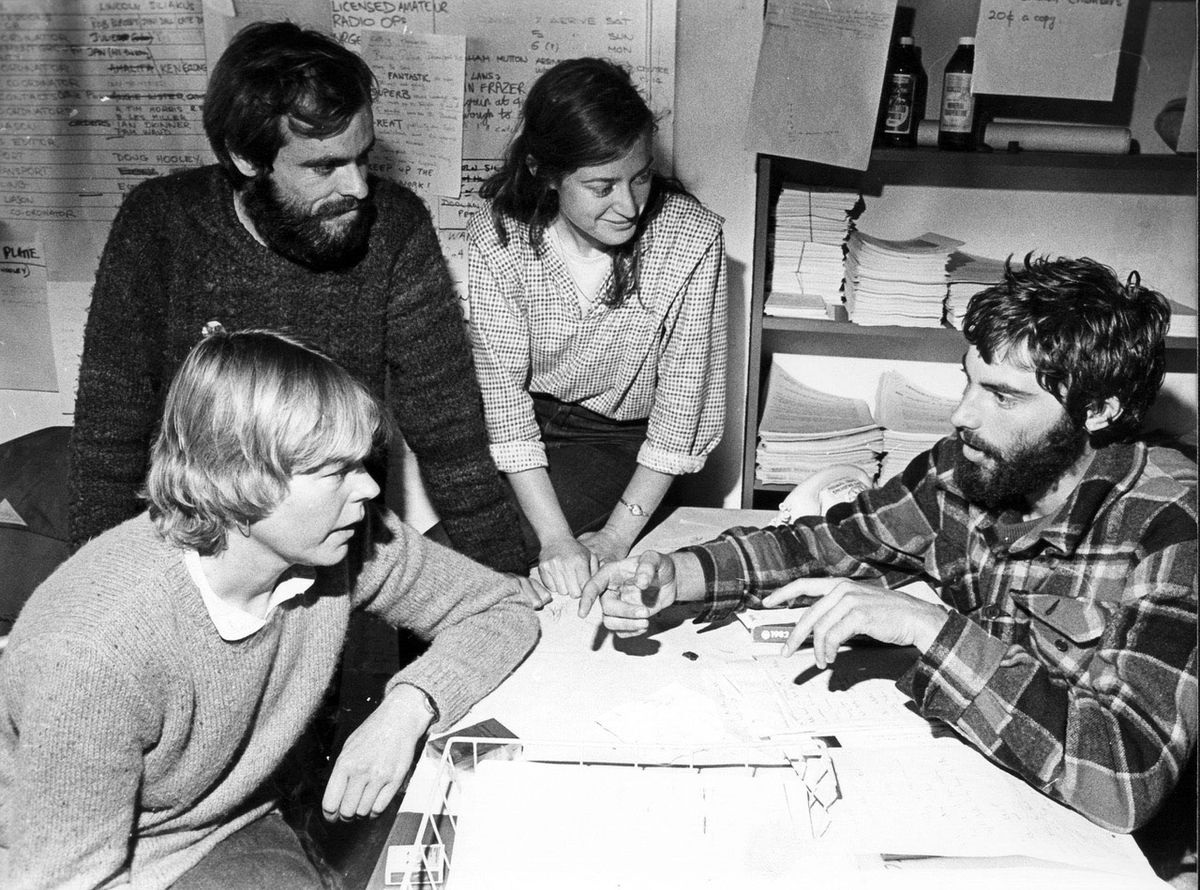
In the Wilderness Society's blockade information centre in Strahan, Tasmania, blockade organisers (clockwise from front left) Pam (Lilith) Waud, Ian Skinner, Cathie Plowman and Geoff Law are deep in discussion during the very early days of the Blockade, 16 December 1982.
And that energy comes through in that early work.
We socialised together and shared houses together and had relationships together and it was great fun. It was exciting to be there. And there was no ‘us and them’—you're just doing it.
Could you tell me a little bit about what you're doing now and about your painting, please?
I taught for 25 years. I taught art at primary school and then I was a classroom teacher doing early childhood, in Hobart.
And when I retired, I thought: now I can paint full time. I can just swap my career across, and spend time in the studio painting. Tasmanian landscape painting is the thing. My love of the landscape here—I have to paint it. So I do.
What's a place that you love to go?
Well, I love the coast. Along the east coast, particularly. I have friends who live at Eagle Hawk Neck and I go and stay there and paint around there. I have little retreats where I go off and just hang out there and I make prints or draw or whatever.
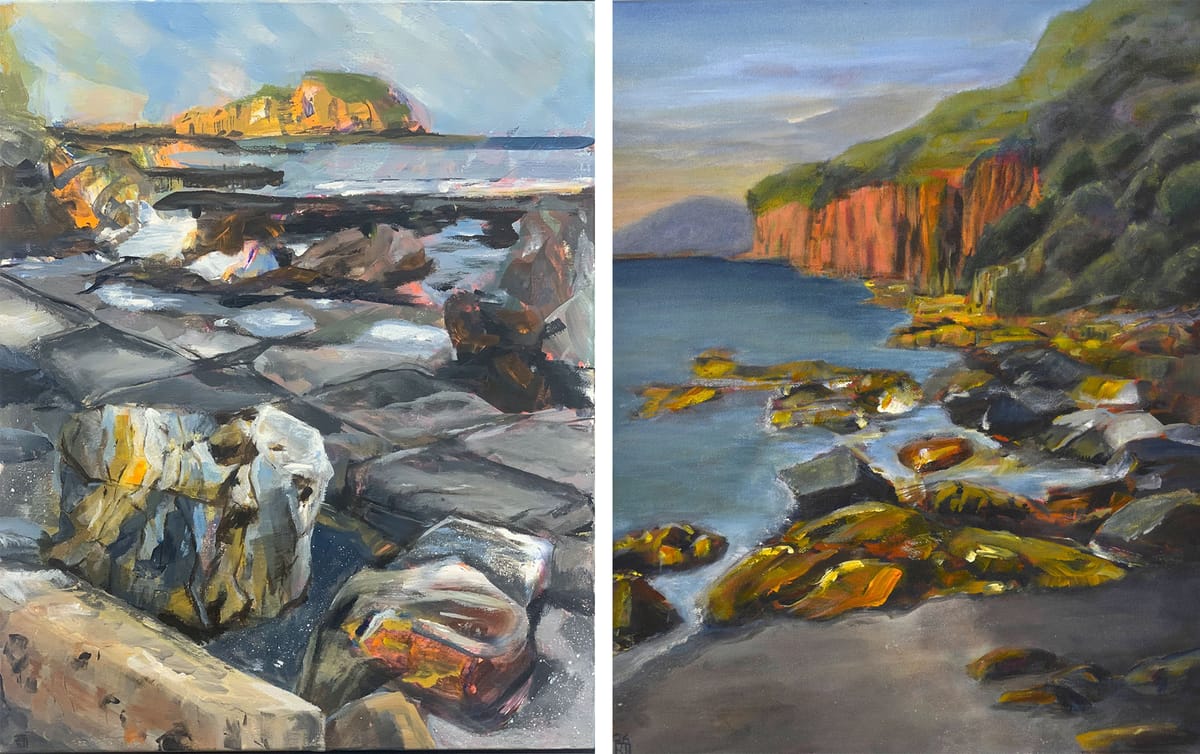
Paintings by Robin Tindale
And you had a show recently in Hobart?
I did. And that was based around Eagle Hawk Neck, and Clyde's Island.
Thanks so much, Robin.
Bye.
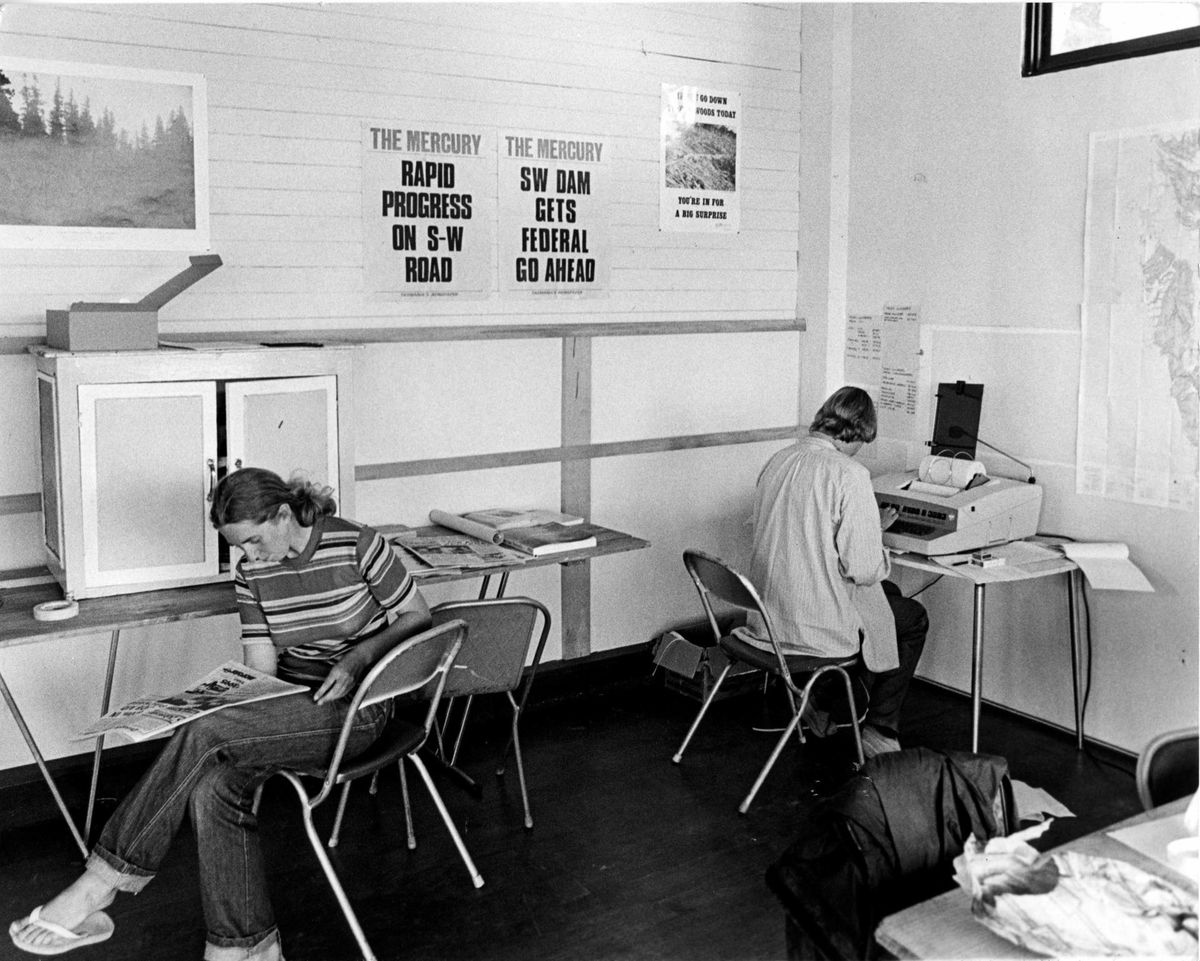
Lilith Waud (right) at work in the Wilderness Society Information Centre
Lilith Waud in conversation with Robin Tindale, August 2026.
Robin: Whose idea was it?
Lilith: I think Bob Brown said we should do it, before memories got too cloudy, or demented, or whatever.
Robin: Jill just showed me an ad that Bob had written and put in Wilderness News, asking for people to send in...
Lilith: Letters. We asked the people to write the stories. It had to be by the blockaders. That was the idea. But Geoff wrote the introduction, and I wrote the chapter introductions. And the rest was their stories. We edited them, though. We were selective. Geoff did a very good introduction. He's a very good writer.
Really, it was a record. A very good book.
We were editors, you and I.
Robin: Yes.
Lilith: And Ian was photographic editor.
Jenny Scott (centre) at Lake Pedder (1969)
Robin: Jenny Scott did some editing as well, final proofing.
Lilith: Jenny Scott was an editor. We must have read those stories so many times.
Robin: My feeling was that, because most people had come through the Franklin campaign, everyone just did what they had to do. Together. Everyone. You were friends, and housemates, and…
Lilith: We lived together. We ate together. During the campaign, everyone worked such long hours that, you know—that’s who you socialise with. At work, as well.
Yes.
Lilith: Those were the days.
Robin: Those were the days!
Ian Skinner in conversation with Rachel Knepfer, August, 2026.
Rachel: Could you give us a little timeline of your history with Wilderness Society and working on the publications? Did the Blockade Book come to you before or after you were working on Wilderness News?
Ian: I'd been involved with the campaign in the Sydney office for quite a few years. My training and work at the time was architectural drafting.
And as you likely realise, at the Wilderness Society, if anybody had a particular skill or inclination, then that was allowed to blossom. In the Sydney office, we had medical people, of all sorts of various professions. I had some graphic skill. And so, basically, “you can do the pamphlets, Ian, because you know how to draw a straight line!”
That was that, and then I left Sydney, went to Hobart, worked on the disastrous state election campaign there, and then into Blockade organising.
I moved into doing transport and logistics initially, for the blockade, but then got involved in coordinating photography services. When things started to come together, we had this extraordinary system that’s a credit to the participants at the Blockade. The boat would come back down from Warners’ Landing and people would hand over their stills to the Wilderness Society. They’d come from Strahan to Hobart, we’d get them processed, we had a darkroom set up in the back of Davey Street.
Would it have been Ted Mead pointed out to me that he used to do prints in that little room at the back, facing the garden?
Yeah. At its peak, that darkroom was going 24/7.
This is amazing.
People would be working in shifts. Working in the darkroom, developing the films, doing the prints. The colour would be going to a commercial lab. Then we'd have a stack of prints available to feed to the media.
Blockaders would finish their time upriver, come back to Hobart, get their processed film, and then they’d go on their merry way. Through that process, the Wilderness Society built up this huge resource of photographs from the protest actions, and people's experiences.
That's remarkable. Who was in the darkroom?
There was a guy called John Bannon—I think he was a professional photographer, certainly very experienced—he may have worked in one of the commercial labs in Hobart, there were a couple around. He was quite instrumental in setting it up, he did all the black and white prints that appear in the book. There were other people: I would have been in there, Ted Mead may have been in there. I suspect Nick Housego was as well. Ralph Lindsay, who ended up working on the Daintree campaign after the Franklin campaign.
If you had a skill or ability, or some training, then there were avenues where you could apply them. Here’s a spot for you, there's a way for you to contribute.
Was there an awareness early on for you that the photograph had such a power to shift the way people thought and to make a difference? This is before Karen Alexander orchestrated the Dombrovskis photograph appearance in newspaper ads, prior to the famous stories about photography changing the trajectory of the campaign.
It’s been fundamental from the get-go. If you look at David Neilson’s book, and Tony Moscal—he was a scientist, an avid bushwalker, photographer, not hugely published—but there's quite a famous (in my mind) poster produced of the Thunder Rush in 1979, in the very early days of the Hydro’s announcement.
The genesis of the Blockade Book came from Lilith. Certainly, the approach came from her—in that it needs to be the voice of the blockaders themselves. That’s underscored by the subtitle of the book: The Franklin Book By the Blockaders.
So there was this fantastic resource of images. We harvested people's film and images and used them for the media. Thousands and thousands and thousands of photographs.
The process we set up was about getting impactful, news impact, from the images, but as a side effect of that, we ended up with this massive resource, and that then led to the realisation that there’s an important visual documentary here that needs to be shared. Because of my background in photography, I was quite involved in that harvesting process, so it seemed to be a natural fit for me to slip into the photo editing role.
Chris Arthur is another important figure, through his role in handling production as the interface between the editorial team and the physical product.
Chris Arthur
One story that you may find slightly amusing involved the supply of photo captions to Chris Arthur and Mark Carter in Melbourne from us at the Wilderness Society Hobart.
We were running hard up against the production schedule and—as these were the days of hard copy being supplied to then be photo-set before physical paste-up and pre-press—we were short on time to mail the captions. I spent hours typing the captions and credits onto the Hobart telex machine and then ran the punch tape through the machine very late at night in order to get hard copy to Melbourne.
The tape was so long that afterwards I threaded it from the machine, up the internal stairway at 130 Davey Street, and back down again, as some kind of triumphant marker.
As in most things that the Wilderness Society does, consensus was really important. In my time there, and well beyond that, in my career: collaboration produces the best results.
This book and the early publications are so filled with the visceral energy of the time.
Yeah, I think it's a fundamental point you make. It was the magic of the time.
You get a group of people together. You kick ideas around and go: Yeah, this is a really good thing.There's a beauty in that.
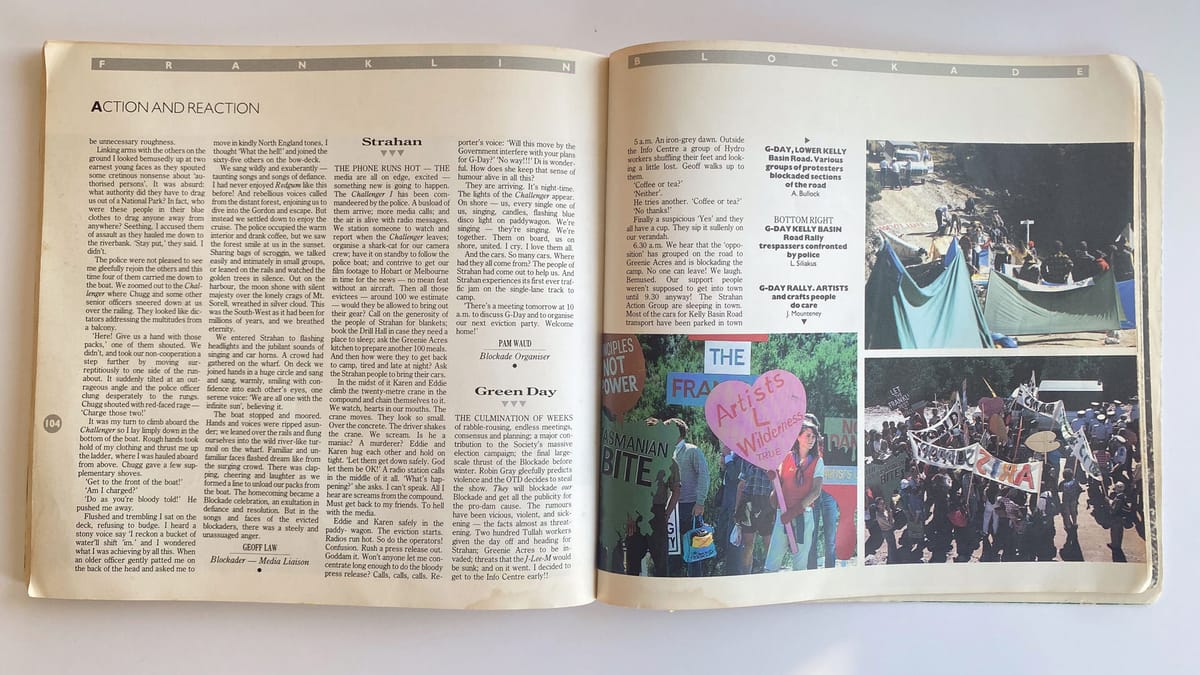
There’s one photograph that I've been drawn to for ages now, by J. Mounteney, the photograph of the woman holding the pink heart that says, Artists love Wilderness, True [as appears as the opening image for this edition].
It's such a good one. That was a really good little action. And these things were all called actions. It was a group of artists from Hobart. A Tasmanian artist, Raymond Arnold, who has been living in Queenstown for quite a few years now, was instrumental in organising that rally. It was on the northern end of the Crotty Road. From my recollection it wasn't an arrest-oriented action, it was an opportunity to bring further colour to the campaign.
What's your feeling about the book, looking at it now after all these years?
I think it's quite telling, in a way. We’ve been going through a year, or a couple of years, of a fair bit of reflection. These books have been sitting on the shelves, whispering quietly for quite a few years, and then you have cause to revisit them, open them up again. Looking at it again, it's a testament to the underlying concept of allowing the blockaders’ direct voices to speak. Particularly in the text, and the images too almost speak for themselves, having the context driving through the didactic captions and the surrounding narratives from the text. What it does is it brings back the essence... The variety of experience and reactions, how people responded, and how they felt about those experiences. It's a real credit that Lilith drove that approach, as opposed to getting a single author to provide a singular narrative—I don’t think it would have had the emotional power.
I love that it's everyone's own voices. It's just got the energy and the character of it. It's lasted really well, hasn't it?
We were quick out of the box. Your point about its durability, and having lasted, is a really good, really good point.
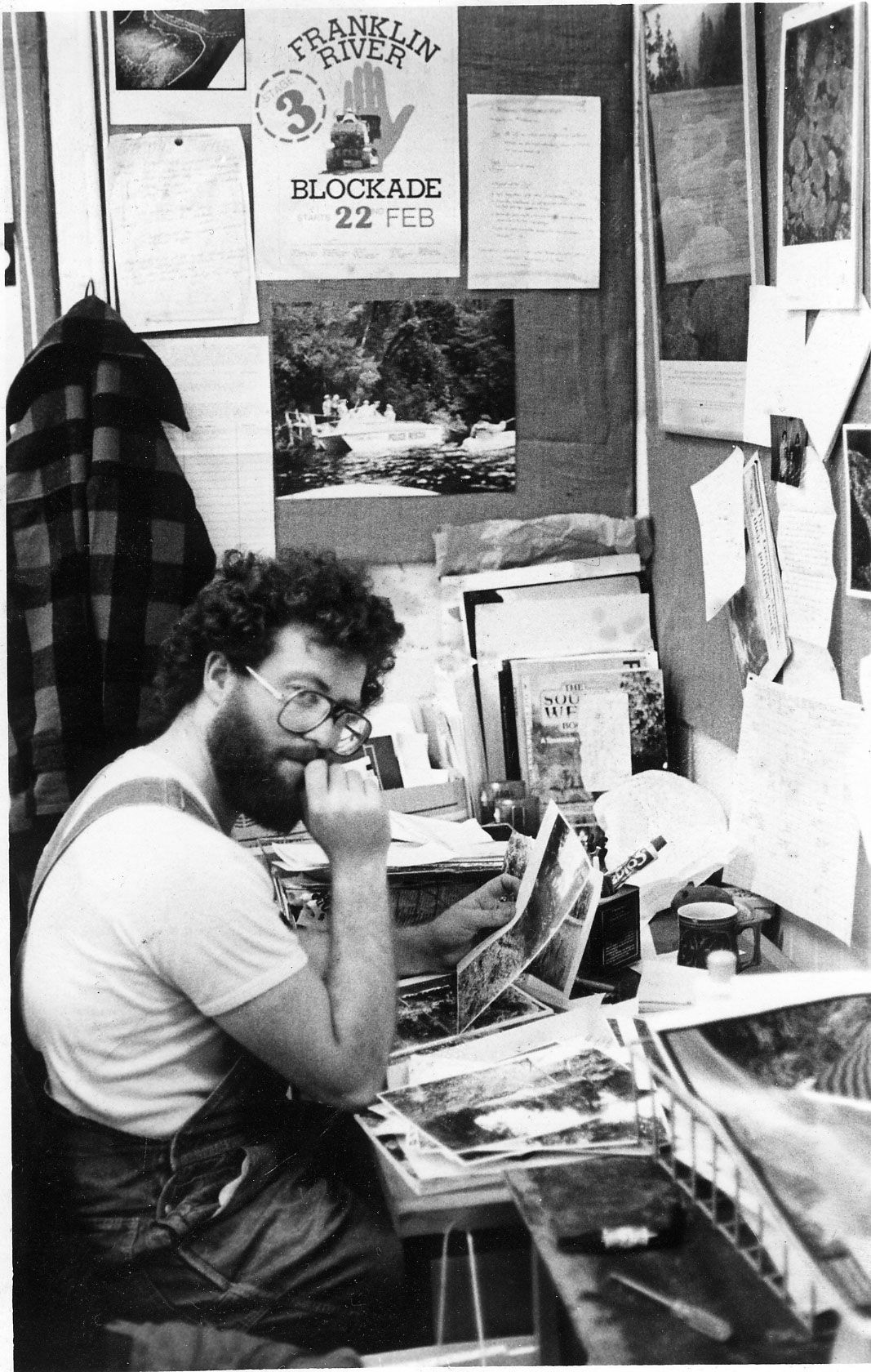
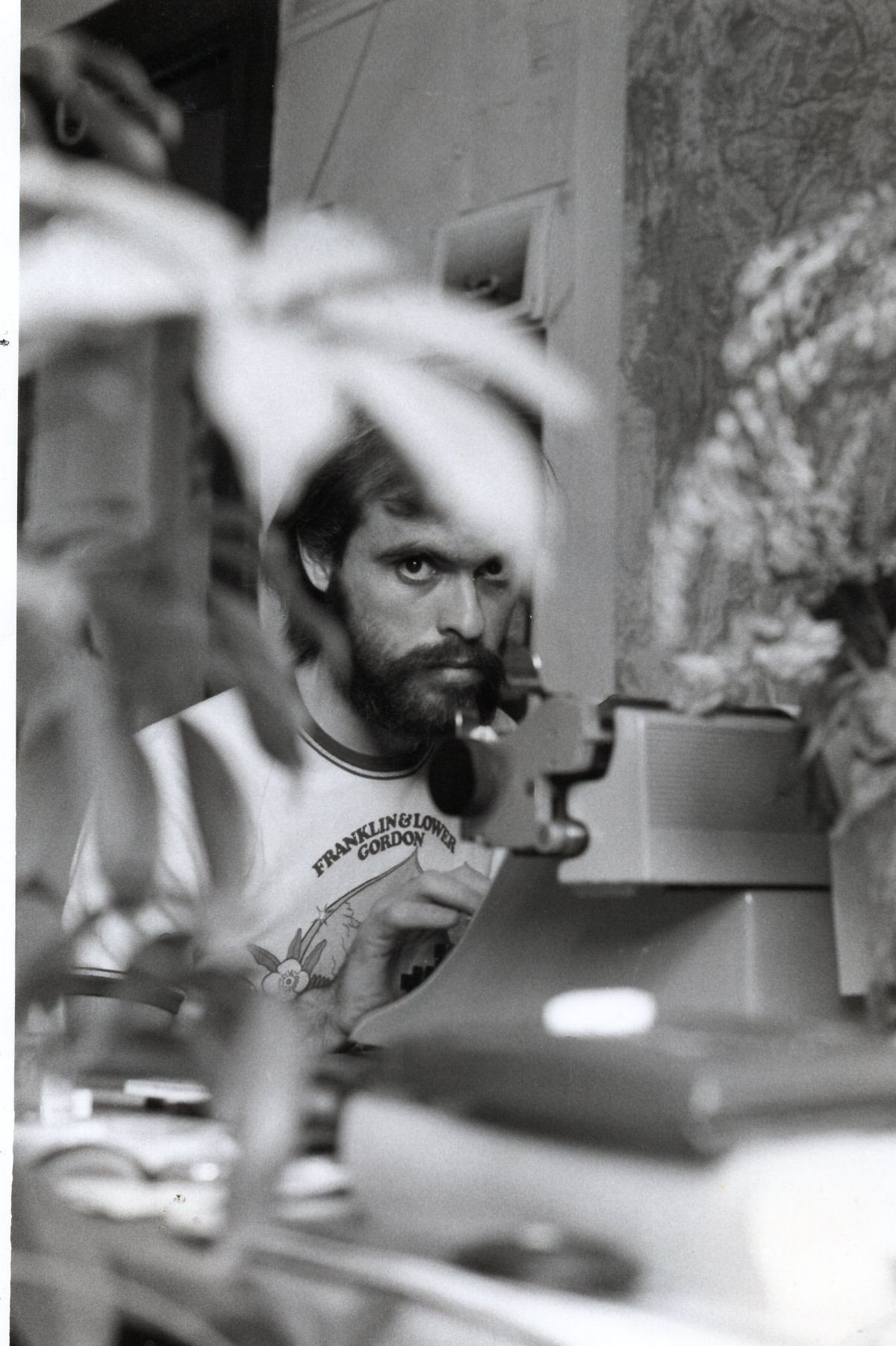
Ian Skinner, self portrait, 1981
Here's a picture of you, with some plants in the foreground, and you're looking dead into the lens of a camera, and you're at a typewriter. Who took this picture?
It's in about 1981. I was in Sydney, quite involved in what was called the Southwestern Action Committee at the time, alongside Geoff and Judy Lambert, David Noble, Judy Kelly.
A magazine put out by the Society of Landscape Architects of Australia came across my table. On the cover was Tony Moscal's photograph of the Thunder Rush. It was great, like, man—'cause getting coverage in any form of media was like pulling teeth, it was just really, really hard, the environment wasn't in the general consciousness. So, I wrote to the editor of the magazine, said, Hi, um, great photo, but there's no story—there’s a whole campaign going on. It's not enough. And the editor wrote back and said, Well, if you want to write the story, we'll publish it.
We'd been producing lots and lots of material and the text had been focused on the economic aspect, involvement with bushwalkers, so on and so forth. So I looked at that, and decided to do one article that covers the story as broadly as possible—the environmental aspect of it, and then the analysis of the woeful economics around the dam proposal.
Geoff Lambert had been really, really active in producing fantastic arguments around that, so I sourced his material for that.
I'd set up a desk in the living room of the house I was in at the time in Leichhardt in Sydney.
The magazine wanted a portrait. So I set up my tripod in the outside lane, shooting through the window. Put it on self-timer, pressed the button, and bolted up the side passage through the front door, down the hallway, into the living room, sat down in the chair, and eyeballed the camera. And got it in one!
Nicely done. And there's a map in the background…
Yeah, that would have been our map of the river.
This has been a very enjoyable, free, free-flowing conversation.
Thanks so much, Ian.
Thank you to Jill McCulloch for the guidance, to Robin Tindale, Lilith Waud and Ian Skinner, and to all who made this book and saved this river. Though out of print, if you search, you may be lucky enough to find yourself a copy.
From the archives: David Attenborough “all success in your battle”
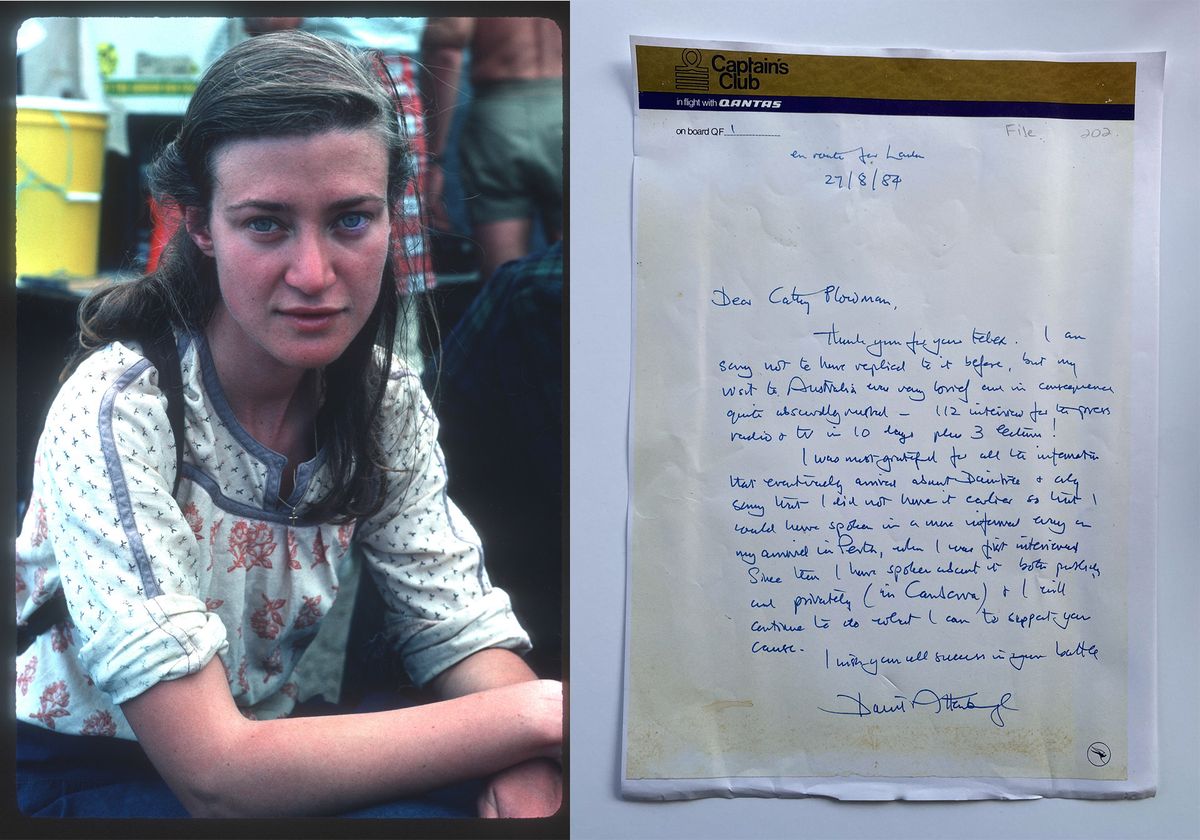
Another treasure from the Archives as we celebrate our fiftieth year. The momentum of Wilderness Society rolled on after the Franklin Blockade. Here is Cathie Plowman, instrumental in organising the Blockade alongside Lilith Waud, just months after the victory, focus turned to the tropical north, to the Daintree, with the support of David Attenborough.
Captain’s Club In flight with QANTAS On board QF 1
En route for London 27/8/84
Dear Cathy Plowman,
Thank you for your telex. I am sorry not to have replied to it before, but my visit to Australia was very brief and in consequence quite absurdly rushed—112 interview for the press radio & tv in 10 days plus 3 lectures! I was most grateful for all the information that eventually arrived about Daintree & only sorry that I did not have it earlier so that I could have spoken in a more informed way about it both publicly and privately (in Canberra) & I will continue to do what I can to support your cause.
I wish you all success in your battle
David Attenborough
Cathie Plowman photographed by Ian Wright on the Franklin Blockade, early 1983 (Ian Wright’s Blockade: 2 Weeks on the Franklin River Blockade, published in 2025 is another powerful record of the Franklin) David Attenborough’s letter from the Wilderness Society archives photographed by Rachel Knepfer.
Thanks to the campaigners, generations of activists, artists, designers, readers, writers and photographers in this issue. If you have anything from your own archive to share, please get in touch.
If you haven't signed up for the Journal, you can do so here. And take a look at past issues of the Journal below. We'd love you to forward this to any friends who you feel might enjoy it too.
We recognise First Nations as the custodians of land and water across the continent of Australia and pay our respects to Elders past and present. We acknowledge sovereignty was never ceded.