News - 02 August 2024
Jabiluka finally slated for inclusion in Kakadu National Park
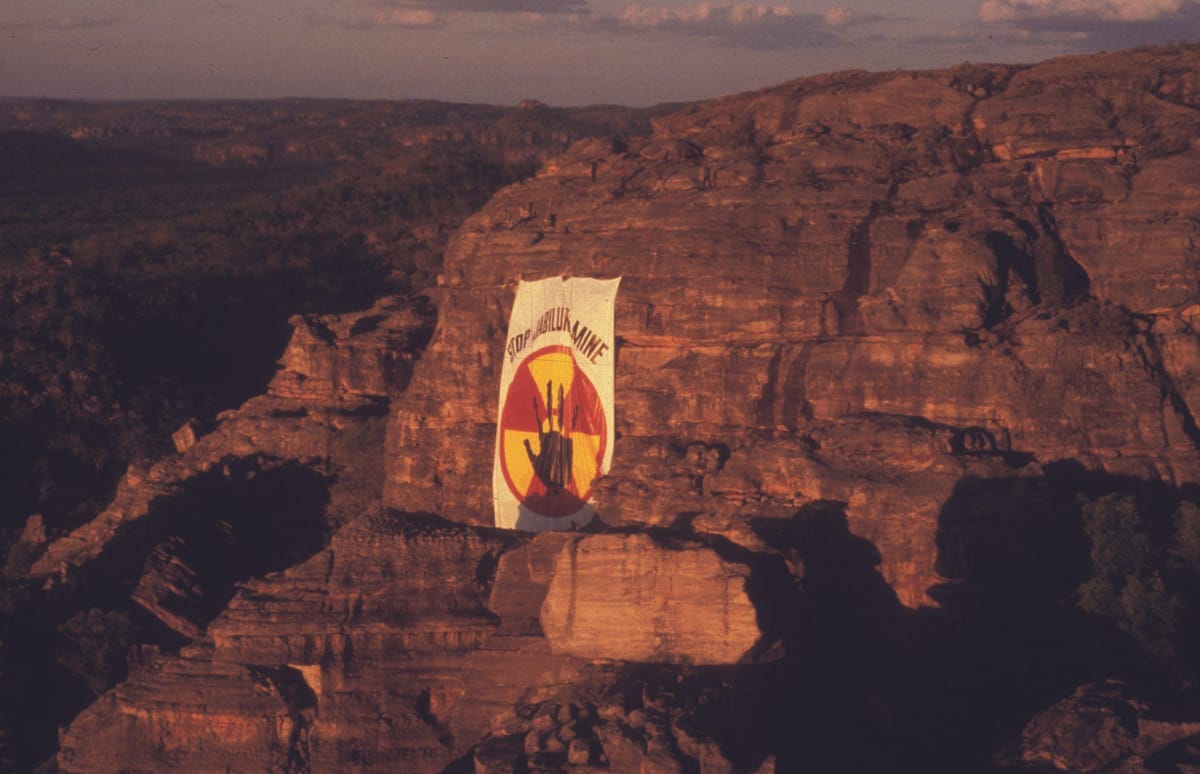
This week’s decision that Jabiluka is finally being slated for inclusion in Kakadu National Park is momentous. A long time coming, it is testament to the enduring efforts of the Mirrar Traditional Owners to defend their Country and culture. This decades-long campaign has been powerfully guided by the Mirrar, led by Yvonne Margarula. And over decades, thousands of people have acted on their concerns about uranium mining proposed for the heart of the world-renowned Kakadu National Park. Now, the Federal and Northern Territory governments have finally reached the sensible decision to not renew the mining lease (held by ERA for more than 40 years).
Alongside Environment Centre NT, Australian Conservation Foundation and Friends of the Earth, the Wilderness Society played a key role in heading off numerous attempts to establish a massive uranium mine at Jabiluka, inside the boundaries of the Kakadu National Park. The proposed uranium mine risked World Heritage-listed wetlands and sites sacred to the Mirrar. The proposed mine site was only 300m from Ubirr Rock. If the mine had gone ahead 20million tonnes of radioactive waste would have been stored a mere 500m from the RAMSAR-listed Djarr Djarr wetlands.
In what was the biggest environmental issue at the time, the late 1990s saw dozens of local Jabiluka Action Groups (JAGs) form all across Australia.
Wilderness Society mobilised shareholders in companies like North Ltd and Energy Resources Australia. Wilderness Society campaigners directly addressed board members of these companies. Members & volunteers were exceptional in leading the group of North Ltd's shareholders that forced the first-ever EGM in Australia called over environmental and traditional owner concerns.
In 1998, the Mirrar called for people to join them in a blockade of the site.
I was one of 5,000 people who travelled to this awe-inspiring and sacred place, to participate in this Traditional Owner-led non-violent direct action (NVDA) mass protest. People rallied around the issue. This anti-nuclear hand symbol became increasingly visible around Australia. Eventually, the mining company agreed it could not and would not mine without Traditional Owner consent.
Many Wilderness Society campaigners and volunteers were instrumental in that era of campaigning to protect Kakadu; working here in Australia at the blockade site, in company meetings, and overseas with advocacy into UN and World Heritage forums.
The long-running campaign to protect Jabiluka from the scourge of uranium mining, is testament to enduring Traditional Owner efforts to defend Country; likewise to sustained community apprehension and care, combined with community efforts and endeavours on Country, in company boardrooms, around kitchen tables, and on the streets. More than twenty-five years on from the height of community activity, the unwavering efforts of the Mirrar mean we can all now welcome the long-fought for opportunity for world-class protections for Jabiluka.
Amelia Young
National Campaigns Director