News - 16 December 2024
The Gunns 20: 20 Years On
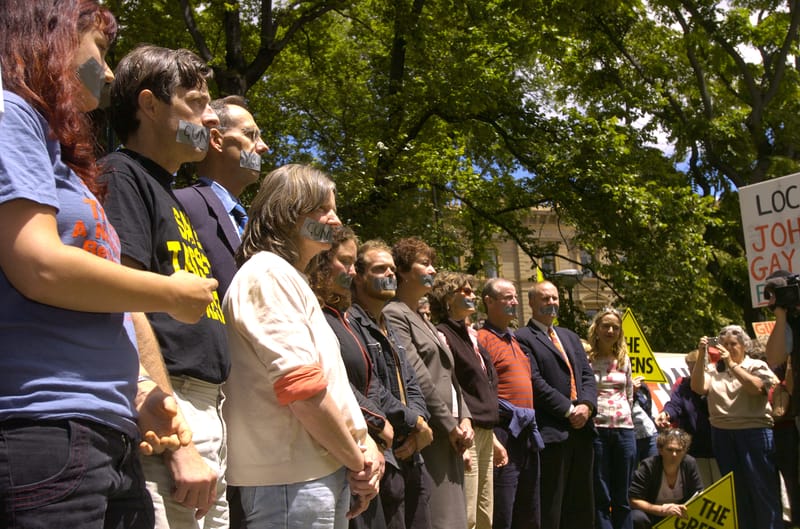
The Gunns 20 SLAPP suit is a globally-renowned David and Goliath battle.
When the largest logging and woodchipping corporation in the southern hemisphere, Gunns Limited, sought to take out a national nature conservation organisation, we responded with grit, determination and clarity.
A SLAPP suit is a “strategic lawsuit against public participation”, and the Gunns case suits this descriptor perfectly: intentionally designed to weaken the Wilderness Society, a very successful organisation borne out of the campaign to stop the damming of the Franklin River. But the shock of being sued quickly powered a strategic response involving the community, legal strategies, fundraising, and the power of free speech.
Twenty years on, fighting the Gunns SLAPP suit is indelibly imprinted on the organisation’s memory. While our ability to withstand the attack is a source of inspiration and pride, the sacrifices it took from the defendants, as well as the wider organisation, are still sobering to recall.
The Wilderness Society is shaped by the people in it, the campaigns we run, the opponents we take on, and their responses to our commitment to success in protecting the environment. As such, the experience of the Gunns SLAPP suit has had a prevailing influence—one that reminds the organisation and our supporters of the Wilderness Society’s commitment to purpose. It reminds us of how necessary it is to have complex responses to complex problems, and the gumption to be able to withstand attacks.
There are also more tangible imprints left on the organisation by the Gunns case. During the case, Gunns tried to force the Wilderness Society to release records connecting it with 128 individual conservationists. Although the judge dismissed this as having the “hallmarks of a fishing expedition”, the lesson was learned that everything that is written down is potentially discoverable in court.
Gunns’ campaign of intimidation was a remarkable mis-read and overreach. The SLAPP suit was a spectacular failure. But the mark it has left is recognisable in how the Australian environment movement campaigns today to stand up to vested interests: with focus and determination, yet caution borne out of the lessons of the Gunns SLAPP suit. The risk of a chilling effect on campaigning and activism—which is an intended outcome of the proponents of SLAPP suits—lingered in the years immediately following the Gunns case.
SLAPP suits are a tool of intimidation, and it will perhaps never be possible to really know the impact the Gunns case had on people’s decisions to engage (or not engage) in civil society, action for environmental protections, or protest activity—a global human right.
Seeing this case through was a feat of endurance. The Wilderness Society’s characteristic persistence, and clarion focus, meant we saw off this egregious SLAPP suit. In order to withstand these sorts of attacks, organisations must have strong foundations and dedication to their purpose.
But there are other ways to stop destabilising litigation like this before it even starts.
The unfortunate reality is that another case like this could happen again in Australia. To this day, the ACT is the only Australian jurisdiction with any kind of anti-SLAPP law. Legislation that prevents these kinds of attacks is critical at both the state and federal levels to protect freedom of speech and rights to protest.
Australia must also ensure a fair say for the public in all government and corporate decision-making. This will result in better outcomes for people and nature, reducing community backlash against projects and developments.
And of course, corporations must recognise and eliminate their biodiversity risk. As we confront and tackle the biodiversity and climate crisis, companies’ social license to operate rests on their ability to shift away from nature destruction. Gunns Limited is the ultimate cautionary tale, their public approval was so eroded by their disregard for Lutruwita / Tasmania’s forests and for civil society, that they folded 3 years after the suit against the Gunns 20 was withdrawn.

by Amelia Young, National Campaigns Director